Ingredient #1Top
Fresh deboned chicken (35%)
Fresh deboned chicken (35%) is a named fresh meat ingredient. The animal source is clearly identified. It reads as an top-tier protein source.
Weltz
Welts Low Fat Diet starts with 35% fresh deboned chicken, 34% chicken meal and 5% fish meal.
At 3,400 kcal/kg, its high-protein, low-fat profile is a candidate for chicken-and-fish tolerant adults needing weight control without a low protein concentration.
Animal ingredients lead, but peas, chickpeas, faba beans, lentils and egg make this a mixed recipe.
It is unsuitable for avoiding chicken, fish, egg or legumes, or for investigating food reactions.
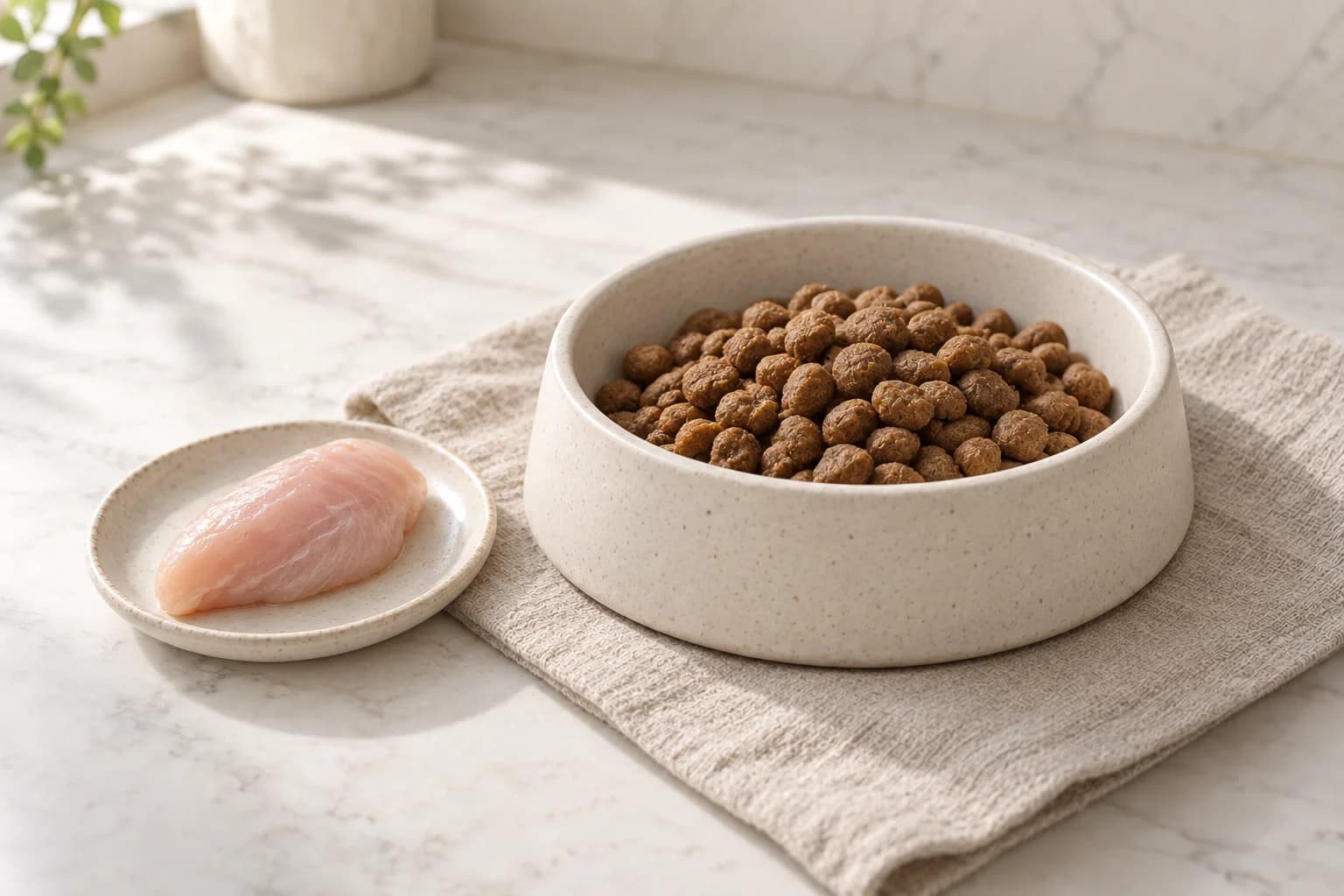
01. NUTRIENT PROFILE
Compare protein, fat and energy density in low, typical and high bands.
This food is on the higher side for crude protein among extruded foods.
This food is on the lower side for crude fat among extruded foods.
This food is on the lower side for calorie density among extruded foods. That alone does not make it a weight-management diet; check portion guidance, fat, and fiber together.
Undisclosed values are not treated as zero.
02. INGREDIENT QUALITY & DISCLOSURE
The analysis uses the registered ingredients. Complete-panel coverage is not verified, so an unlisted ingredient cannot be assumed absent.
Read the listed ingredients below. Complete-panel coverage is not verified here; do not infer that an unlisted ingredient is absent.
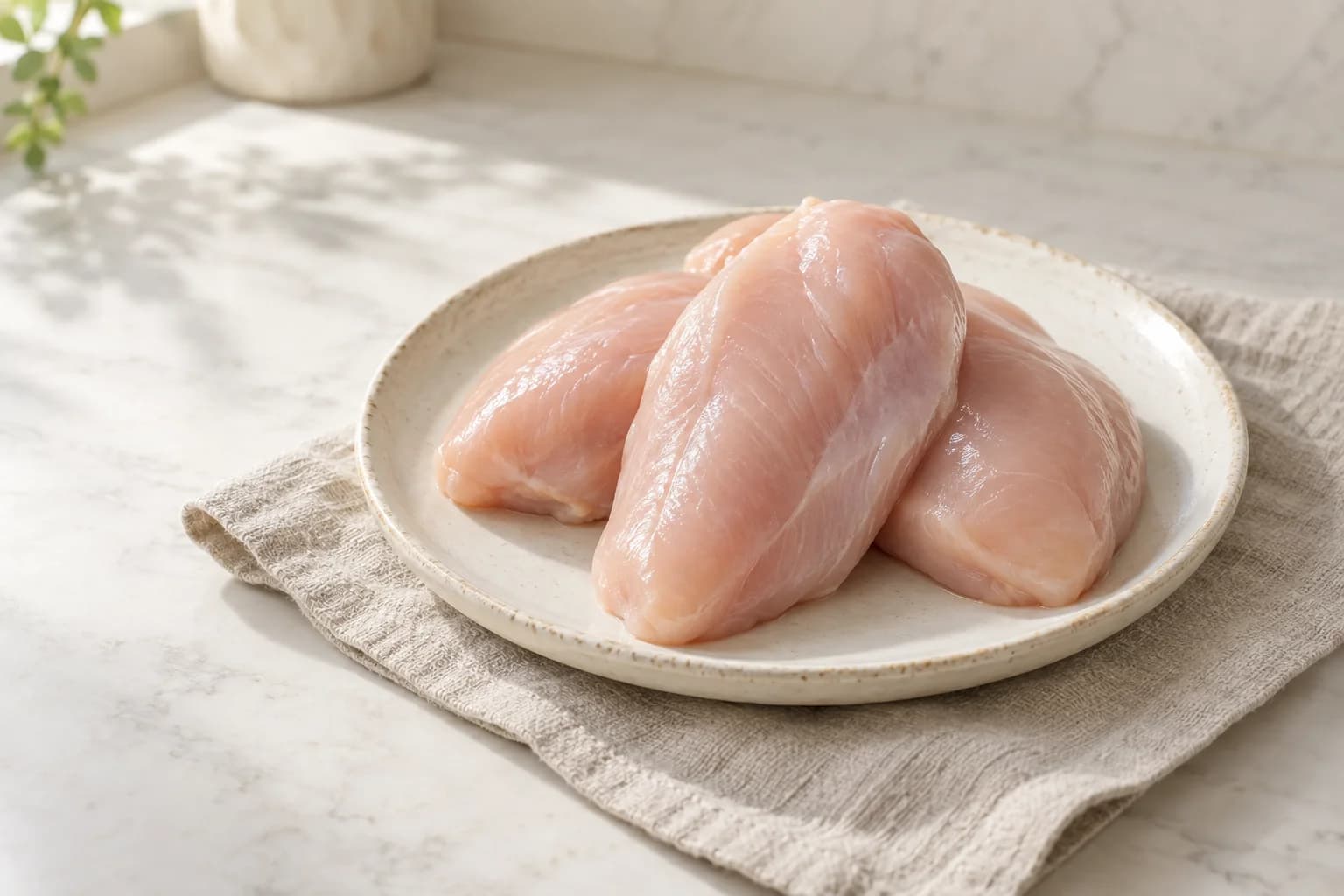
Fresh deboned chicken (35%) is a named fresh meat ingredient. The animal source is clearly identified. It reads as an top-tier protein source.
Chicken meal(34%) is a species-named animal meal ingredient. It is rendered rather than fresh, but the species source is still clearly identified. It reads as an upper-tier protein source.
Fish meal(5%) is a family-level animal meal. Animal protein is present, but species transparency is one step lower. It reads as an mid-tier protein source.
Animal protein · Fresh deboned chicken (35%) (#1), Chicken meal(34%) (#2), Fish meal(5%) (#3), Hydrolyzed chicken meal(3%) (#5), Fresh deboned salmon(3%) (#6), Hydrolyzed salmon (#18), Egg powder (#35)
Plant protein · Pea (#7), Chick pea (#11), Faba bean (#12), Lentils (#15)
Animal-based does not always mean clearly sourced.
Unspecified animal protein is read conservatively.
03. CHOOSING FOR YOUR DOG
Fresh deboned chicken (35%), Chicken meal(34%) supply animal protein at the start of the ingredient list. Tapioca, Sweet potato supply carbohydrate energy. The recipe combines animal protein sources with carbohydrate sources.
Pea, Chick pea contribute plant protein alongside carbohydrates and fiber further down the ingredient list. Total crude protein is not a measure of meat-derived protein alone. Cellulose(Refined fiber) supply fiber. For stool or satiety considerations, the disclosed crude-fiber amount adds useful context beyond the ingredient's presence.
Across the registered ingredients, multiple protein sources appear, including chicken, unspecified, salmon, egg. Some protein sources are not fully identified, which limits choices that require excluding a specific protein.
Among foods made the same way, protein is higher, fat is lower, and calorie density is lower. This combination is worth comparing when protein matters but a higher-calorie food is not the aim. High protein alone does not make it an active-dog-only food; judge weight changes against total daily calories.
Plant-protein concentration remains the clearest trade-off here.
04. COMPARE FOODS
Exact protein-type matches come first, then close protein-family matches fill the comparison.
05. MANUFACTURING & DISCLOSURE
Founded in 2010 in South Korea.
Only basic guaranteed analysis is visible, so deeper nutrition comparison stays hard to trust.
The English-language public recall sources checked here are not enough to make a confident recall call for this brand.
May 12, 2026