Label analysisGrade CListed ingredientsKibble (Extruded)

Weltz

Weltz Dog Joint Care

Editor ingredient insight

Welts Joint Care combines 40% fresh deboned chicken and 32% chicken meal with chicken fat and fish meal.

At 32% protein, 14% fat and 3,900 kcal/kg, it is a candidate for active adults that tolerate chicken and fish.

Added glucosamine, chondroitin, boswellia and MSM are selection details, but the high calorie density can be a drawback when weight reduction is the first priority for joint care.

Peas, chickpeas, faba beans, lentils and egg also feature, ruling it out when any of those ingredients, chicken or fish need to be avoided.
Fresh-meat leadPlant booster present
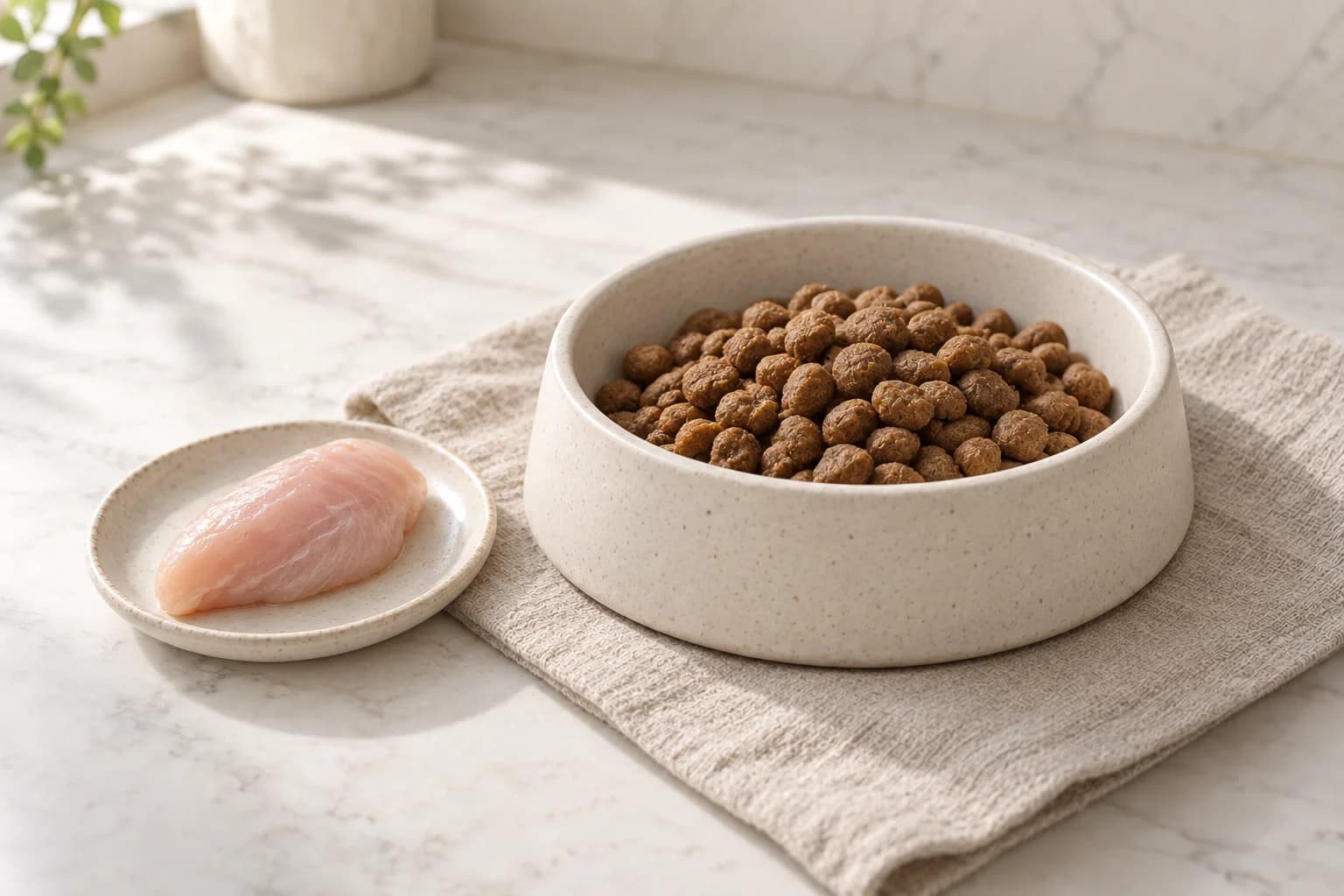
Illustration of chicken beside a dog-food bowl
Primary protein ingredient · Chicken

01. NUTRIENT PROFILE

Key nutrients & mineral profile

As-fed basis
Disclosed protein and fat
Protein 32%Fat 14%Other 54%Other includes moisture, ash and remaining components.
Position within the same processing type

Compare protein, fat and energy density in low, typical and high bands.

Protein positionHigher

This food is on the higher side for crude protein among extruded foods.

Fat positionTypical

This food sits around the typical crude fat range among extruded foods.

Calorie densityHigher

This food is on the higher side for calorie density among extruded foods. The same serving can provide more energy, so check portion guidance.

Key guaranteed nutrientsAs-fed
Calcium1.2%
Phosphorus0.9%
Crude fiber5%
Omega-3Not disclosed
Omega-6Not disclosed

Undisclosed values are not treated as zero.

02. INGREDIENT QUALITY & DISCLOSURE

Disclosed ingredients & ingredient grade

The analysis uses the registered ingredients. Complete-panel coverage is not verified, so an unlisted ingredient cannot be assumed absent.

Listed ingredients

Read the listed ingredients below. Complete-panel coverage is not verified here; do not infer that an unlisted ingredient is absent.
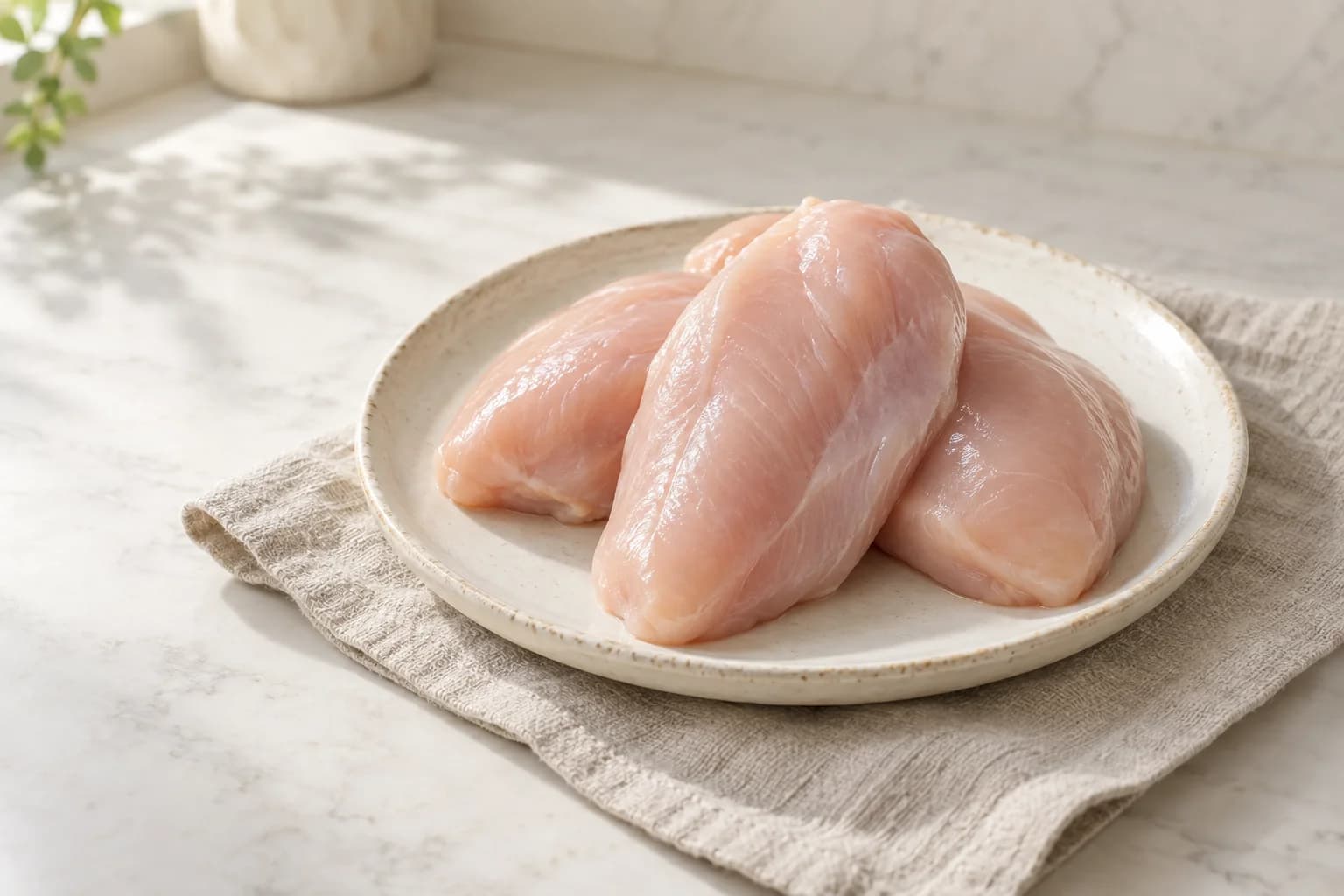
Chicken ingredient illustration
Primary protein ingredient · Chicken
C3/6Ingredient gradeMixed
Ingredient #1 · Fresh deboned chicken (40%)Top
Fresh Meat
Ingredient #2 · Chicken meal(32%)Upper
Named Meal
Ingredient #3 · Refined chicken oilMid
Generic Fat
Ingredient #1Top

Fresh deboned chicken (40%)

Fresh deboned chicken (40%) is a named fresh meat ingredient. The animal source is clearly identified. It reads as an top-tier protein source.

Ingredient #2Upper

Chicken meal(32%)

Chicken meal(32%) is a species-named animal meal ingredient. It is rendered rather than fresh, but the species source is still clearly identified. It reads as an upper-tier protein source.

Ingredient #3Mid

Refined chicken oil

Refined chicken oil is a generic fat source. It supports calories, but transparency is weaker than a named oil or fat. It reads as an mid-tier fat source.

Available ingredient listIn disclosed order
Fresh deboned chicken (40%) — Primary positive ingredientsChicken meal(32%) — Support positive ingredientsRefined chicken oil — Neutral ingredientsFish meal(5%) — Support positive ingredientsHydrolyzed chicken meal(3%) — Support positive ingredientsPea — Caution ingredientsBeet pulp — Support positive ingredientsCelluose(Refined fiber) — Neutral ingredientsChick pea — Caution ingredientsFaba bean — Caution ingredientsBanana powder — Neutral ingredientsLentils — Caution ingredientsFlaxseed — Neutral ingredientsSweetpotato — Neutral ingredientsRefined fish oil — Support positive ingredientsGlucosamine — Support positive ingredientsChondroitin(Mucopolysaccharide) — Support positive ingredientsCLA(Conjugated linoleic acid) — Neutral ingredientsL-Carnitine — Support positive ingredientsBoswellia extract — Support positive ingredientsMSM(Methyl Sulfonyl Methane) — Support positive ingredientsHydrolyzed salmon — Support positive ingredientsTapioca — Neutral ingredientsVitamin premix[Retinyl acetate(vitamin A), Cholecalciferol(vitamin D3), DL-α-tocopherol acetate(vitamin E), Thiamine mononitrate(vitamin B1), Riboflavin(vitamin B2), Pyridoxine hydrochloride(vitamin B6), Cyanocobalamin(vitamin B12), D-biotin(Biotin), Folic acid, Calcium D-pantothenate, Niacin] — Support positive ingredientsMineral premix (Ferrous sulfate, Zinc sulfate, Manganese oxide, Copper sulfate, Calcium iodate, Cobalt sulfate, Sodium Selenite) — Support positive ingredientsCalcium carbonate — Neutral ingredientsPotassium chloride — Support positive ingredientsHerb extract (Angelica sinensis, Angelica genuflexa Nutt., White woodland peony, Rehmannia glutinosa) — Neutral ingredientsβ-carotene — Neutral ingredientsProtease (Enzyme) — Support positive ingredientsOrganic mineral (Manganese, Iron, Zinc, Copper, Cobalt, Iodine, Selenium) — Support positive ingredientsProbiotics (Bacillus subtilis, Bacillus licheniformis, Aspergillus oryzae, Lactobacillus Acidophilus, Streptococcus thermophilus, Saccharomyces cerevisiae) — Support positive ingredientsPrebiotics (Chicory inulin, Fructooligosaccharide) — Support positive ingredientsCurcumin — Neutral ingredientsButyric acid — Neutral ingredientsEgg powder — Primary positive ingredientsChitosan — Neutral ingredientsBrewer’s dried yeast — Neutral ingredientsFenugreek extract — Neutral ingredientsYucca extract — Support positive ingredientsNatural antioxidant (Rosemary extract, Vitamin E, Citric acid, Flavonoid) — Support positive ingredientsBerry mix (Maqui Berry, Acai berry, Aronia) — Neutral ingredients
Primary positive ingredientsSupport positive ingredientsAlternative proteinNeutral ingredientsCaution ingredientsHigh-caution ingredients
Protein sourceIngredient guide

Whole plant protein source observed early

Animal protein · Fresh deboned chicken (40%) (#1), Chicken meal(32%) (#2), Fish meal(5%) (#4), Hydrolyzed chicken meal(3%) (#5), Hydrolyzed salmon (#22), Egg powder (#36)

Plant protein · Pea (#6), Chick pea (#9), Faba bean (#10), Lentils (#12)

The protein number may include influence from whole plant ingredients.

This is not treated like processed protein boosting, but it is worth checking.

Included support ingredientsNutrient guide
Fish oilSkin and joint support ingredientGlucosamineJoint support ingredientChondroitinJoint support ingredientMucopolysaccharide proteinJoint support ingredientL-carnitineHeart and weight support ingredientBoswelliaJoint support ingredientMSMJoint support ingredientDigestive enzymesDigestive support ingredientProbioticsGut support ingredientPrebioticsGut support ingredientInulinGut support ingredientChicoryGut support ingredientFOSGut support ingredientTurmeric/curcuminAntioxidant and joint support ingredientYucca extractStool odor support ingredient

03. CHOOSING FOR YOUR DOG

What to consider before feeding

Fresh deboned chicken (40%), Chicken meal(32%) supply animal protein at the start of the ingredient list. Sweetpotato, Tapioca supply carbohydrate energy. The recipe combines animal protein sources with carbohydrate sources.

Pea, Chick pea contribute plant protein alongside carbohydrates and fiber further down the ingredient list. Total crude protein is not a measure of meat-derived protein alone. Refined chicken oil add fat and energy; fat content is a separate choice criterion from the protein sources.

Across the registered ingredients, multiple protein sources appear, including chicken, unspecified, salmon, egg. Some protein sources are not fully identified, which limits choices that require excluding a specific protein.

What works well in this food

  • The first ingredient is a species-named fresh meat.
  • Crude protein is on the higher side.
  • Nutrient disclosure is broad enough to compare real numbers directly.

Check before feeding

  • Whole plant protein sources can contribute to crude protein, so the animal-protein share still needs a closer read.
  • The top three are animal-led, but legumes repeat just below them in the early full ingredient list. Read this as a possible ingredient-splitting pattern rather than a clean top-three issue.
  • Higher calorie density can raise daily intake in a gram-for-gram switch. Weight reduction needs portions and treat calories to be adjusted together.

When this food fits your dog

Among foods made the same way, protein is higher, fat is typical, and calorie density is higher. Compare this combination when both protein and concentrated energy matter. It can help plan smaller portions, but dogs prone to weight gain should not switch gram-for-gram from a less calorie-dense food.

Consider it first when

  • Public-data-first comparison
  • Baseline shortlist building
  • Conservative first-pass screening

Choose another food first when

  • You want a stronger ingredient-quality story first
  • You need dog-specific fit instead of public-review screening

High calorie density remains the clearest trade-off here.

04. COMPARE FOODS

Smart chicken alternatives

Exact protein-type matches come first, then close protein-family matches fill the comparison.

05. MANUFACTURING & DISCLOSURE

Manufacturer background & public information

Weltz background

Founded in 2010 in South Korea.

Disclosure confidence D

Only basic guaranteed analysis is visible, so deeper nutrition comparison stays hard to trust.

Recall information

The English-language public recall sources checked here are not enough to make a confident recall call for this brand.

May 12, 2026

Final word

Interpret this for my dog

The food-first public score is only the starting point. Once your dog’s activity, weight goals, life stage, and health status are applied, the recommendation order and interpretation can change.

There is enough here to keep the food in comparison, but not enough to stop comparing yet.