Label analysisGrade DListed ingredientsKibble (Extruded)

Taste of the Wild

Taste of the Wild PREY Angus Beef Limited Ingredient

Editor ingredient insight

Taste of the Wild PREY Angus Beef starts with beef, lentils, tomato pomace, and chicken fat, with taurine and L-carnitine disclosed.

It is worth considering for beef-led limited-style feeding, not for lentil or chicken-fat avoidance.
Fresh-meat leadPlant booster present
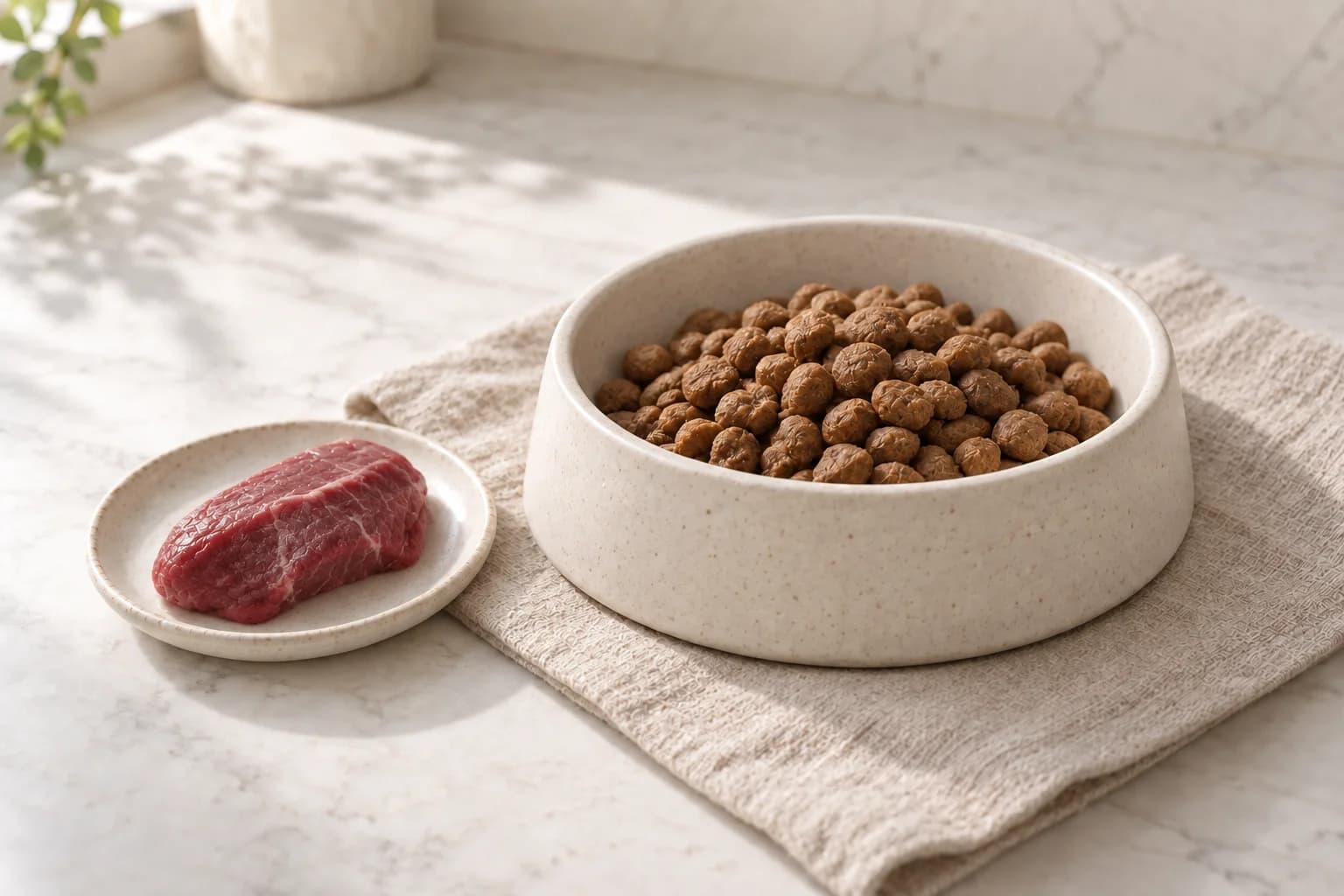
Illustration of beef beside a dog-food bowl
Primary protein ingredient · Beef

01. NUTRIENT PROFILE

Key nutrients & mineral profile

As-fed basis
Disclosed protein and fat
Protein 27%Fat 15%Other 58%Other includes moisture, ash and remaining components.
Position within the same processing type

Compare protein, fat and energy density in low, typical and high bands.

Protein positionTypical

This food sits around the typical crude protein range among extruded foods.

Fat positionTypical

This food sits around the typical crude fat range among extruded foods.

Calorie densityTypical

This food sits around the typical calorie range among extruded foods. Check the feeding guide and weight trend alongside this comparison.

Key guaranteed nutrientsAs-fed
CalciumNot disclosed
PhosphorusNot disclosed
Crude fiber5%
Omega-30.5%
Omega-62.5%

Undisclosed values are not treated as zero.

02. INGREDIENT QUALITY & DISCLOSURE

Disclosed ingredients & ingredient grade

The analysis uses the registered ingredients. Complete-panel coverage is not verified, so an unlisted ingredient cannot be assumed absent.

Listed ingredients

Read the listed ingredients below. Complete-panel coverage is not verified here; do not infer that an unlisted ingredient is absent.
Beef ingredient illustration
Primary protein ingredient · Beef
C3/6Ingredient gradeMixed
Ingredient #1 · BeefTop
Fresh Meat
Ingredient #2 · LentilsLower
Whole Plant Protein
Ingredient #3 · Dried Tomato PomaceMid
Fiber Support
Ingredient #1Top

Beef

Beef is a named fresh meat ingredient. The animal source is clearly identified. It reads as an top-tier protein source.

Ingredient #2Lower

Lentils

Lentils is a whole plant-protein ingredient. It is not a processed protein concentrate, but when it appears near the top it can still weaken the animal-protein-led structure. It reads as an lower-tier plant protein booster.

Ingredient #3Mid

Dried Tomato Pomace

Dried Tomato Pomace reads as a fiber-support ingredient. It contributes texture and fiber support more than core protein value. It reads as an mid-tier carb source.

Available ingredient listIn disclosed order
Beef — Primary positive ingredientsLentils — Caution ingredientsDried Tomato Pomace — Neutral ingredientsChicken Fat (preserved with mixed tocopherols) — Neutral ingredientsNatural Flavor — Support positive ingredientsDicalcium Phosphate — Neutral ingredientsSalmon Oil (a source of DHA) — Support positive ingredientsSalt — Neutral ingredientsDL-Methionine — Neutral ingredientsCholine Chloride — Support positive ingredientsTaurine — Support positive ingredientsL-Carnitine — Support positive ingredientsDried Lactobacillus Plantarum Fermentation Product — Support positive ingredientsDried Bacillus Subtilis Fermentation Product — Neutral ingredientsDried Lactobacillus Acidophilus Fermentation Product — Support positive ingredientsDried Enterococcus Faecium Fermentation Product — Support positive ingredientsDried Bifidobacterium Animalis Fermentation Product — Support positive ingredientsVitamin E Supplement — Support positive ingredientsIron Proteinate — Neutral ingredientsZinc Proteinate — Support positive ingredientsCopper Proteinate — Support positive ingredientsFerrous Sulfate — Neutral ingredientsZinc Sulfate — Support positive ingredientsManganese Sulfate — Neutral ingredientsCopper Sulfate — Support positive ingredientsPotassium Iodide — Neutral ingredientsThiamine Mononitrate — Neutral ingredientsManganese Proteinate — Neutral ingredientsVitamin A Supplement — Neutral ingredientsBiotin — Support positive ingredientsNiacin — Neutral ingredientsCalcium Pantothenate — Neutral ingredientsSodium Selenite — Support positive ingredientsPyridoxine Hydrochloride — Neutral ingredientsVitamin B12 Supplement — Neutral ingredientsRiboflavin — Neutral ingredientsVitamin D3 Supplement — Neutral ingredientsFolic Acid — Neutral ingredients
Primary positive ingredientsSupport positive ingredientsAlternative proteinNeutral ingredientsCaution ingredientsHigh-caution ingredients
Protein sourceIngredient guide

Whole plant protein source in the top 3

Animal protein · Beef (#1)

Plant protein · Lentils (#2)

The crude protein number may include influence from whole plant ingredients.

This is not the same as processed protein boosting, but it is not purely meat-led.

Included support ingredientsNutrient guide
Salmon oilSkin and joint support ingredientTaurineHeart support ingredientL-carnitineHeart and weight support ingredientProbioticsGut support ingredientOmega-3Skin and joint support ingredientOmega-6Skin and coat support ingredientEPA+DHASkin, joint, and heart support ingredientVitamin EAntioxidant and skin support ingredient

03. CHOOSING FOR YOUR DOG

What to consider before feeding

Beef supply animal protein at the start of the ingredient list. Lentils contribute plant protein alongside carbohydrates and fiber among the leading ingredients. Total crude protein is not a measure of meat-derived protein alone.

Chicken Fat (preserved with mixed tocopherols) add fat and energy; fat content is a separate choice criterion from the protein sources.

What works well in this food

  • The first ingredient is a species-named fresh meat.
  • Crude protein does not drop into a clearly low band.
  • Nutrient disclosure is broad enough to compare real numbers directly.

Check before feeding

  • Fresh meat carries a moisture variable. When whole plant protein sources are also high in the list, part of the crude-protein number may come from those plant ingredients.
  • Whole plant protein sources can contribute to crude protein, so the animal-protein share still needs a closer read.
  • Top ingredients include an FDA-investigated non-hereditary DCM ingredient profile, so this part deserves a more cautious read.

When this food fits your dog

Among foods made the same way, protein is typical, fat is typical, and calorie density is typical. Calorie density alone does not separate this into an active-dog or weight-management food. Consider protein exclusions and fat, then set portions for the dog’s weight and activity.

Consider it first when

  • Public-data-first comparison
  • Baseline shortlist building
  • Conservative first-pass screening

Choose another food first when

  • You want a stronger ingredient-quality story first
  • You need dog-specific fit instead of public-review screening

Plant-protein concentration remains the clearest trade-off here.

04. COMPARE FOODS

Smart beef alternatives

Exact protein-type matches come first, then close protein-family matches fill the comparison.

05. MANUFACTURING & DISCLOSURE

Manufacturer background & public information

Taste of the Wild background

Founded in 2007 in the United States.

Disclosure confidence D

Only basic guaranteed analysis is visible, so deeper nutrition comparison stays hard to trust.

Recall information

This brand has a confirmed recall history, including the 2012 Diamond-manufactured recall.

May 12, 2026

Final word

Interpret this for my dog

The food-first public score is only the starting point. Once your dog’s activity, weight goals, life stage, and health status are applied, the recommendation order and interpretation can change.

Treat this review as an early screen. If the food stays interesting, verify it again with your dog-specific context before acting.