Ingredient #1Top
Salmon
Salmon is a named fresh meat ingredient. The animal source is clearly identified. It reads as an top-tier protein source.
Taste of the Wild
Taste of the Wild Pacific Stream Salmon starts with salmon, fish meal, sweet potatoes, peas, pea flour, lentils, and canola oil.
It is worth considering for fish-tolerant adults, not for legume avoidance or high-salmon-density expectations.
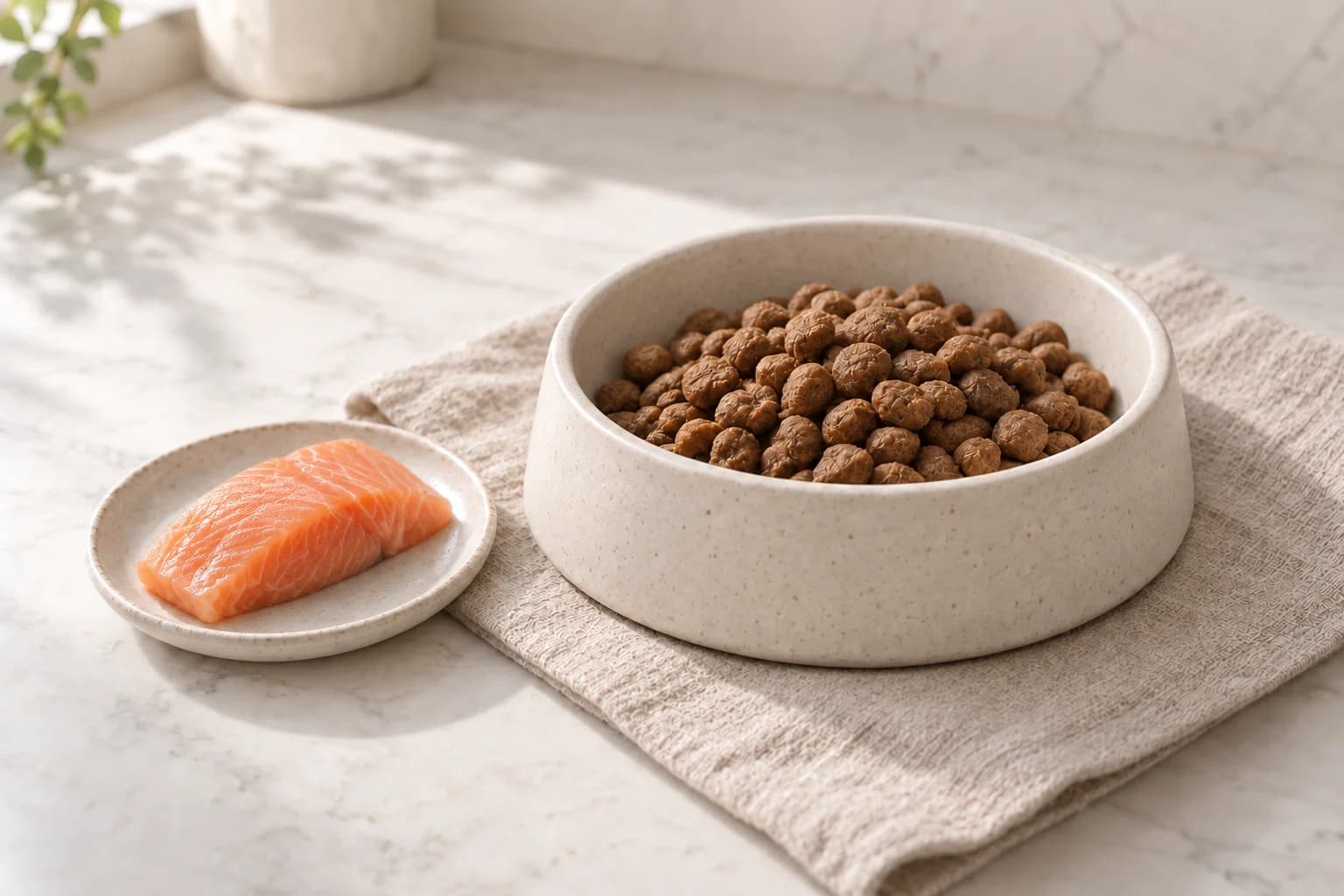
01. NUTRIENT PROFILE
Compare protein, fat and energy density in low, typical and high bands.
This food sits around the typical crude protein range among extruded foods.
This food sits around the typical crude fat range among extruded foods.
This food sits around the typical calorie range among extruded foods. Check the feeding guide and weight trend alongside this comparison.
Undisclosed values are not treated as zero.
02. INGREDIENT QUALITY & DISCLOSURE
The analysis uses the registered ingredients. Complete-panel coverage is not verified, so an unlisted ingredient cannot be assumed absent.
Read the listed ingredients below. Complete-panel coverage is not verified here; do not infer that an unlisted ingredient is absent.
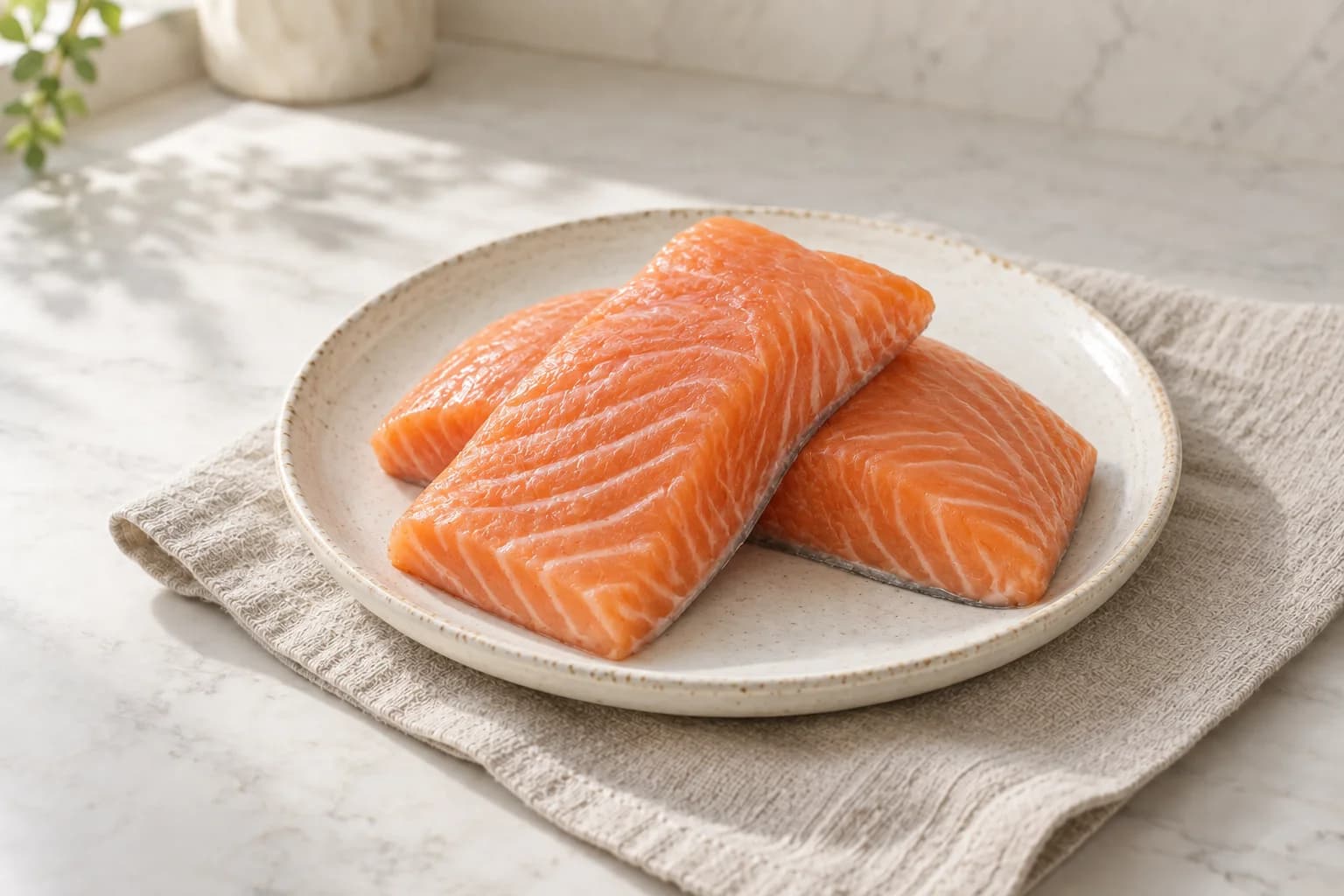
Salmon is a named fresh meat ingredient. The animal source is clearly identified. It reads as an top-tier protein source.
Fish Meal is a family-level animal meal. Animal protein is present, but species transparency is one step lower. It reads as an mid-tier protein source.
Sweet Potatoes is a starchy tuber ingredient. It is not a grain, but it still reads mainly as a starch and energy source. It reads as an upper-tier carb and fiber source.
Animal protein · Salmon (#1), Fish Meal (#2), Salmon Meal (#8), Smoke-Flavored Salmon (#9)
Plant protein · Peas (#4), Pea Flour (#5), Lentils (#6)
Animal-based does not always mean clearly sourced.
Unspecified animal protein is read conservatively.
03. CHOOSING FOR YOUR DOG
Salmon, Fish Meal supply animal protein at the start of the ingredient list. Sweet Potatoes supply carbohydrate energy. The recipe combines animal protein sources with carbohydrate sources.
Peas, Pea Flour contribute plant protein alongside carbohydrates and fiber further down the ingredient list. Total crude protein is not a measure of meat-derived protein alone. Canola Oil (preserved with mixed tocopherols) add fat and energy; fat content is a separate choice criterion from the protein sources.
Across the registered ingredients, multiple protein sources appear, including salmon, unspecified. Some protein sources are not fully identified, which limits choices that require excluding a specific protein.
Among foods made the same way, protein is typical, fat is typical, and calorie density is typical. Calorie density alone does not separate this into an active-dog or weight-management food. Consider protein exclusions and fat, then set portions for the dog’s weight and activity.
Plant-protein concentration remains the clearest trade-off here.
04. COMPARE FOODS
Exact protein-type matches come first, then close protein-family matches fill the comparison.
05. MANUFACTURING & DISCLOSURE
Founded in 2007 in the United States.
Only basic guaranteed analysis is visible, so deeper nutrition comparison stays hard to trust.
This brand has a confirmed recall history, including the 2012 Diamond-manufactured recall.
May 12, 2026