Label analysisGrade DListed ingredientsKibble (Extruded)

Royal Canin

Royal Canin Small Indoor Puppy

Editor ingredient insight

Royal Canin Small Indoor Puppy starts with brewers rice, chicken by-product meal, and corn, with lower protein and fat than the regular small puppy line.

It is worth considering for less-active indoor small puppies, not for high-protein/high-fat puppy feeding.
Plant booster present
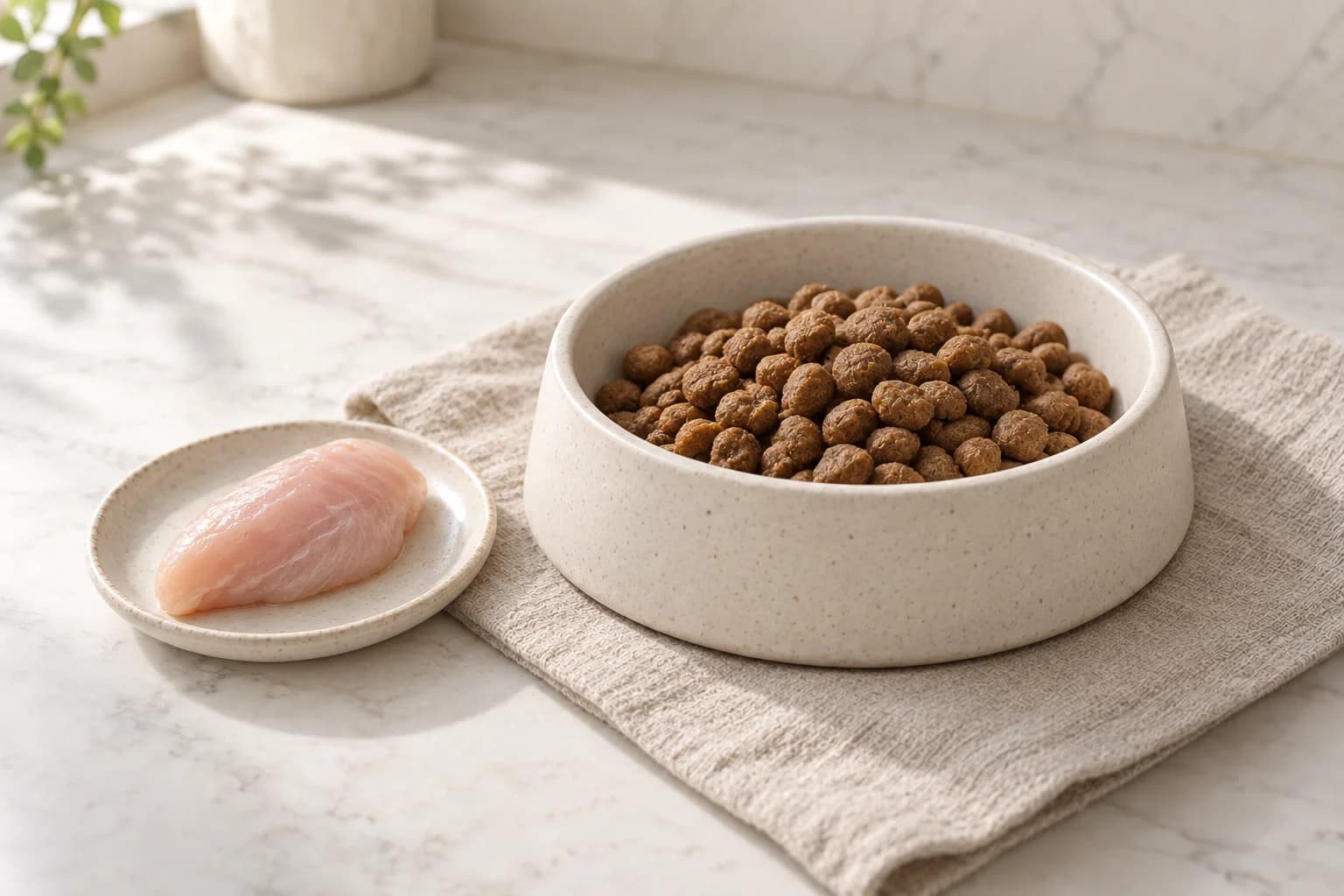
Illustration of chicken beside a dog-food bowl
Primary protein ingredient · Chicken

01. NUTRIENT PROFILE

Key nutrients & mineral profile

As-fed basis
Disclosed protein and fat
Protein 25%Fat 16%Other 59%Other includes moisture, ash and remaining components.
Position within the same processing type

Compare protein, fat and energy density in low, typical and high bands.

Protein positionTypical

This food sits around the typical crude protein range among extruded foods.

Fat positionHigher

This food is on the higher side for crude fat among extruded foods.

Calorie densityTypical

This food sits around the typical calorie range among extruded foods. Check the feeding guide and weight trend alongside this comparison.

Key guaranteed nutrientsAs-fed
CalciumNot disclosed
PhosphorusNot disclosed
Crude fiber3.8%
Omega-3Not disclosed
Omega-6Not disclosed

Undisclosed values are not treated as zero.

02. INGREDIENT QUALITY & DISCLOSURE

Disclosed ingredients & ingredient grade

The analysis uses the registered ingredients. Complete-panel coverage is not verified, so an unlisted ingredient cannot be assumed absent.

Listed ingredients

Read the listed ingredients below. Complete-panel coverage is not verified here; do not infer that an unlisted ingredient is absent.
Chicken ingredient illustration
Primary protein ingredient · Chicken
D1.5/6Ingredient gradeConservative
Ingredient #1 · Brewers riceLower
Refined Carb
Ingredient #2 · chicken by-product mealLowest
By-product Meal
Ingredient #3 · cornMid
Refined Carb
Ingredient #1Lower

Brewers rice

Brewers rice is a refined carbohydrate source. It usually reads as a starch and energy source rather than a protein driver. It reads as an lower-tier carb source.

Ingredient #2Lowest

chicken by-product meal

chicken by-product meal is a by-product meal. It can still contribute protein, but the primary-ingredient read should stay conservative. It reads as an bottom-tier protein source.

Ingredient #3Mid

corn

corn is a refined carbohydrate source. It usually reads as a starch and energy source rather than a protein driver. It reads as an mid-tier carb source.

Available ingredient listIn disclosed order
Brewers rice — Neutral ingredientschicken by-product meal — High-caution ingredientscorn — Neutral ingredientschicken fat — Neutral ingredientsdried plain beet pulp — Support positive ingredientswheat gluten — High-caution ingredientsnatural flavors — Support positive ingredientscorn gluten meal — High-caution ingredientsmonocalcium phosphate — Neutral ingredientsvegetable oil — Neutral ingredientssodium aluminosilicate — Neutral ingredientspotassium chloride — Support positive ingredientspea fiber — Neutral ingredientscalcium carbonate — Neutral ingredientstaurine — Support positive ingredientsfish oil — Support positive ingredientsrice flour — Neutral ingredientsfructooligosaccharides — Neutral ingredientssodium tripolyphosphate — Neutral ingredientssalt — Neutral ingredientscholine chloride — Support positive ingredientshydrolyzed yeast — Neutral ingredientsL-lysine — Neutral ingredientsmarine microalgae oil — Neutral ingredientsDL-methionine — Neutral ingredientsvitamins[DL-alpha tocopherol acetate (source of vitamin E), L-ascorbyl-2-polyphosphate (source of vitamin C), biotin, D-calcium pantothenate, vitamin A acetate, pyridoxine hydrochloride (vitamin B6), niacin supplement, folic acid, vitamin B12 supplement, thiamine mononitrate (vitamin B1), vitamin D3 supplement, riboflavin supplement] — Support positive ingredientsL-threonine — Neutral ingredientstrace minerals[zinc proteinate, zinc oxide, manganese proteinate, ferrous sulfate, manganous oxide, copper sulfate, sodium selenite, calcium iodate, copper proteinate] — Support positive ingredientsmarigold extract (Tagetes erecta L.) — Neutral ingredientsYucca schidigera extract — Support positive ingredientsL-carnitine — Support positive ingredientscarotene — Neutral ingredientsrosemary extract — Neutral ingredientspreserved with mixed tocopherols and citric acid. — Neutral ingredients
Primary positive ingredientsSupport positive ingredientsAlternative proteinNeutral ingredientsCaution ingredientsHigh-caution ingredients
Protein sourceIngredient guide

Unclear animal protein source

Animal protein · chicken by-product meal (#2)

Plant protein · wheat gluten (#6), corn gluten meal (#8)

Animal-based does not always mean clearly sourced.

Unspecified animal protein is read conservatively.

Included support ingredientsNutrient guide
TaurineHeart support ingredientFish oilSkin and joint support ingredientFOSGut support ingredientMarine algae oilSkin and joint support ingredientLuteinEye support ingredientYucca extractStool odor support ingredientL-carnitineHeart and weight support ingredientEPA+DHASkin, joint, and heart support ingredient

03. CHOOSING FOR YOUR DOG

What to consider before feeding

chicken by-product meal supply animal protein, starting at ingredient 2. Brewers rice, corn supply carbohydrate energy. A carbohydrate source leads the list, a meaningful distinction when seeking a meat-led recipe.

wheat gluten, corn gluten meal supplement plant protein further down the list, after the first three ingredients. The crude-protein figure includes both animal and plant contributions. chicken fat add fat and energy; fat content is a separate choice criterion from the protein sources.

What works well in this food

  • Crude protein does not drop into a clearly low band.
  • Top ingredients do not show a prominent FDA-investigated non-hereditary DCM ingredient profile.

Check before feeding

  • By-product meal is a rendered ingredient that can include parts such as heads, feet, and organs. It can still provide protein, but it is harder to tell exactly what parts are included and in what proportion, so ingredient transparency is read more conservatively.
  • Plant proteins can lift crude protein on the label, but the real animal-protein share still needs a closer check.
  • Calcium and phosphorus are not disclosed, so growth-stage use would need an extra check.

When this food fits your dog

Among foods made the same way, protein is typical, fat is higher, and calorie density is typical. Calorie density alone does not separate this into an active-dog or weight-management food. Consider protein exclusions and fat, then set portions for the dog’s weight and activity. Fat is higher even though calories are not, so any fat restriction needs a separate assessment.

Consider it first when

  • Public-data-first comparison
  • Baseline shortlist building
  • Conservative first-pass screening

Choose another food first when

  • You want a stronger ingredient-quality story first
  • You need dog-specific fit instead of public-review screening

Plant-protein concentration remains the clearest trade-off here.

04. COMPARE FOODS

Smart chicken alternatives

Exact protein-type matches come first, then close protein-family matches fill the comparison.

05. MANUFACTURING & DISCLOSURE

Manufacturer background & public information

Royal Canin background

Founded in 1968 in France.

Disclosure confidence C1

There is a usable disclosure baseline, but the public record is still fairly thin.

Recall information

This brand has a confirmed public recall history, with a recent 2023 mislabeling case in public sources.

May 12, 2026

Final word

Interpret this for my dog

The food-first public score is only the starting point. Once your dog’s activity, weight goals, life stage, and health status are applied, the recommendation order and interpretation can change.

Treat this review as an early screen. If the food stays interesting, verify it again with your dog-specific context before acting.