Label analysisGrade DListed ingredientsKibble (Extruded)

Royal Canin

Royal Canin Canine Satiety Support Weight Management

Editor ingredient insight

Royal Canin Satiety Support Weight Management leads with powdered cellulose, poultry meals, and wheat gluten, with high protein, low fat, very low calories, L-carnitine, and glucosamine.

It is worth considering for veterinarian-guided weight management, not as a general daily food.
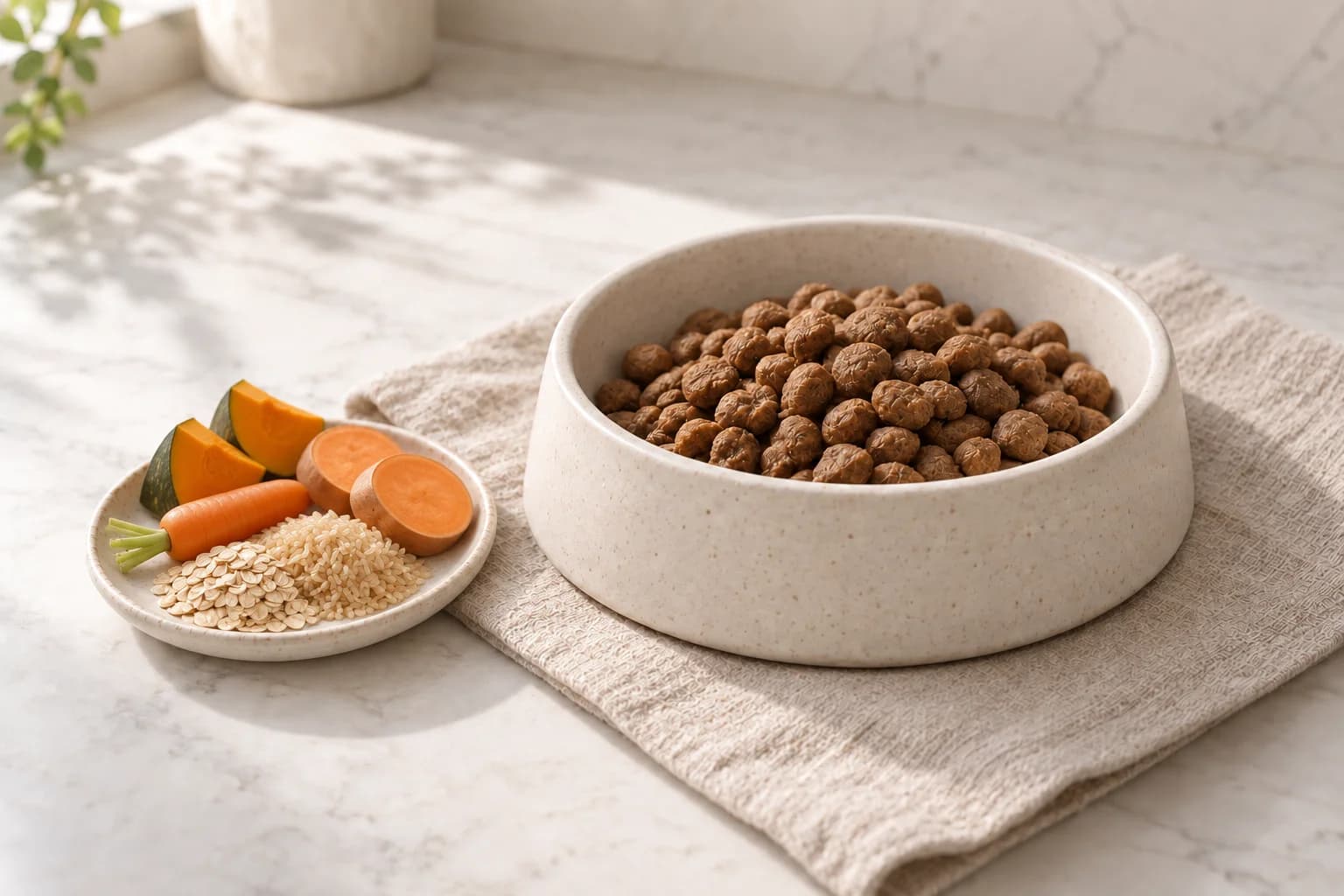
Plant booster present
Illustration of grains and vegetables beside a dog-food bowl
Grain and vegetable illustration

01. NUTRIENT PROFILE

Key nutrients & mineral profile

As-fed basis
Disclosed protein and fat
Protein 30%Fat 9.5%Other 60.5%Other includes moisture, ash and remaining components.
Position within the same processing type

Compare protein, fat and energy density in low, typical and high bands.

Protein positionHigher

This food is on the higher side for crude protein among extruded foods.

Fat positionLower

This food is on the lower side for crude fat among extruded foods.

Calorie densityLower

This food is on the lower side for calorie density among extruded foods. That alone does not make it a weight-management diet; check portion guidance, fat, and fiber together.

Key guaranteed nutrientsAs-fed
Calcium0.91%
Phosphorus0.76%
Crude fiber6.8%
Omega-30.62%
Omega-61.84%

Undisclosed values are not treated as zero.

02. INGREDIENT QUALITY & DISCLOSURE

Disclosed ingredients & ingredient grade

The analysis uses the registered ingredients. Complete-panel coverage is not verified, so an unlisted ingredient cannot be assumed absent.

Listed ingredients

Read the listed ingredients below. Complete-panel coverage is not verified here; do not infer that an unlisted ingredient is absent.
Grains and vegetables ingredient illustration
Grain and vegetable illustration
D1.5/6Ingredient gradeConservative
Ingredient #1 · Powdered CelluloseLower
Fiber Filler
Ingredient #2 · Meat Meal (Chicken, Turkey, Duck)Upper
Named Meal
Ingredient #3 · Wheat GlutenLowest
Processed Plant Protein
Ingredient #1Lower

Powdered Cellulose

Powdered Cellulose reads as a filler-style fiber ingredient. It is harder to count as a stronger quality signal. It reads as an lower-tier carb source.

Ingredient #2Upper

Meat Meal (Chicken, Turkey, Duck)

Meat Meal (Chicken, Turkey, Duck) is a species-named animal meal ingredient. It is rendered rather than fresh, but the species source is still clearly identified. It reads as an upper-tier protein source.

Ingredient #3Lowest

Wheat Gluten

Wheat Gluten is a processed plant-protein booster. It can lift crude protein without the same animal-protein share, so the animal-protein read should stay separate. It reads as an bottom-tier plant protein booster.

Available ingredient listIn disclosed order
Powdered Cellulose — Neutral ingredientsMeat Meal (Chicken, Turkey, Duck) — Support positive ingredientsWheat Gluten — High-caution ingredientsTapioca — Neutral ingredientsWheat — Neutral ingredientsAnimal-Derived Protein (Chicken, Turkey) — Support positive ingredientsChicory — Support positive ingredientsCorn — Neutral ingredientsCorn Gluten — High-caution ingredientsAnimal Fat (Chicken, Turkey, Duck) — Neutral ingredientsMineral Premix — Neutral ingredientsFish Oil — Support positive ingredientsSodium Butyrate — Neutral ingredientsPsyllium Husk — Support positive ingredientsFructooligosaccharides — Neutral ingredientsMarigold Extract (source of Lutein) — Neutral ingredientsGlucosamine — Support positive ingredientsL-Carnitine — Support positive ingredientsMucopolysaccharide Protein (source of Chondroitin) — Support positive ingredients
Primary positive ingredientsSupport positive ingredientsAlternative proteinNeutral ingredientsCaution ingredientsHigh-caution ingredients
Protein sourceIngredient guide

Ingredient-label protein analysis

Animal protein · Meat Meal (Chicken, Turkey, Duck) (#2), Animal-Derived Protein (Chicken, Turkey) (#6)

Plant protein · Wheat Gluten (#3), Corn Gluten (#9)

Even high crude protein can be strongly influenced by processed plant protein.

This is hard to read as meat-protein centered.

Included support ingredientsNutrient guide
ChicoryGut support ingredientFish oilSkin and joint support ingredientPsyllium huskGut support ingredientGlucosamineJoint support ingredientL-carnitineHeart and weight support ingredientMucopolysaccharide proteinJoint support ingredientOmega-3Skin and joint support ingredientOmega-6Skin and coat support ingredientEPA+DHASkin, joint, and heart support ingredientTaurineHeart support ingredient

03. CHOOSING FOR YOUR DOG

What to consider before feeding

This is a prescription-diet candidate for weight management. Read purpose fit and veterinary guidance before treating it as a standard star-ranked food.

What works well in this food

  • Crude Protein, Crude Fat, Crude Fiber, Calories are disclosed, so calorie density, fat load, and satiety-support context can be compared.
  • A species-named animal ingredient appears right after the first grain or starch source.
  • Crude protein is on the higher side.
  • Calorie density is on the lower side.

Check before feeding

  • Processed plant protein sits in the top 3, so the crude-protein number clearly includes protein support beyond meat ingredients.
  • Sodium Excess (2.60g/1000 kcal, reference ≤3.75g/1000 kcal): Sodium is running high. For heart or kidney-sensitive dogs, watch Hypertension, cardiac burden risk.
  • The first ingredient is a grain or starch source and the animal ingredient follows later, so this does not read as a strongly meat-centered recipe.

When this food fits your dog

Prescription purpose: weight management.

Consider it first when

  • Comparing real nutrient numbers
  • Shopping by disclosure breadth
  • Choosing from public data first

Choose another food first when

  • Meat intensity is the first shopping axis
  • You want the strongest ingredient quality first

Plant-protein concentration remains the clearest trade-off here.

04. COMPARE FOODS

weight management prescription alternatives

Compare weight management prescription diets first. For therapeutic diets, clinical fit and veterinary direction matter more than a standard score.

05. MANUFACTURING & DISCLOSURE

Manufacturer background & public information

Royal Canin background

Founded in 1968 in France.

Disclosure confidence C1

There is a usable disclosure baseline, but the public record is still fairly thin.

Recall information

This brand has a confirmed public recall history, with a recent 2023 mislabeling case in public sources.

May 12, 2026

Final word

Interpret this for my dog

The food-first public score is only the starting point. Once your dog’s activity, weight goals, life stage, and health status are applied, the recommendation order and interpretation can change.

Treat this review as an early screen. If the food stays interesting, verify it again with your dog-specific context before acting.