Label analysisGrade DListed ingredientsKibble (Extruded)

Royal Canin

Royal Canin Canine Renal Support A

Editor ingredient insight

Royal Canin Renal Support A starts with rice, corn flour, animal fat, corn gluten, and soy protein, so it should not be judged as a general ingredient-upgrade food.

It is a kidney-support prescription diet built around 16% protein, 0.2% phosphorus, 0.2% sodium, and 0.7% potassium; I would only consider it under veterinary direction, not for healthy dogs.
Plant booster present
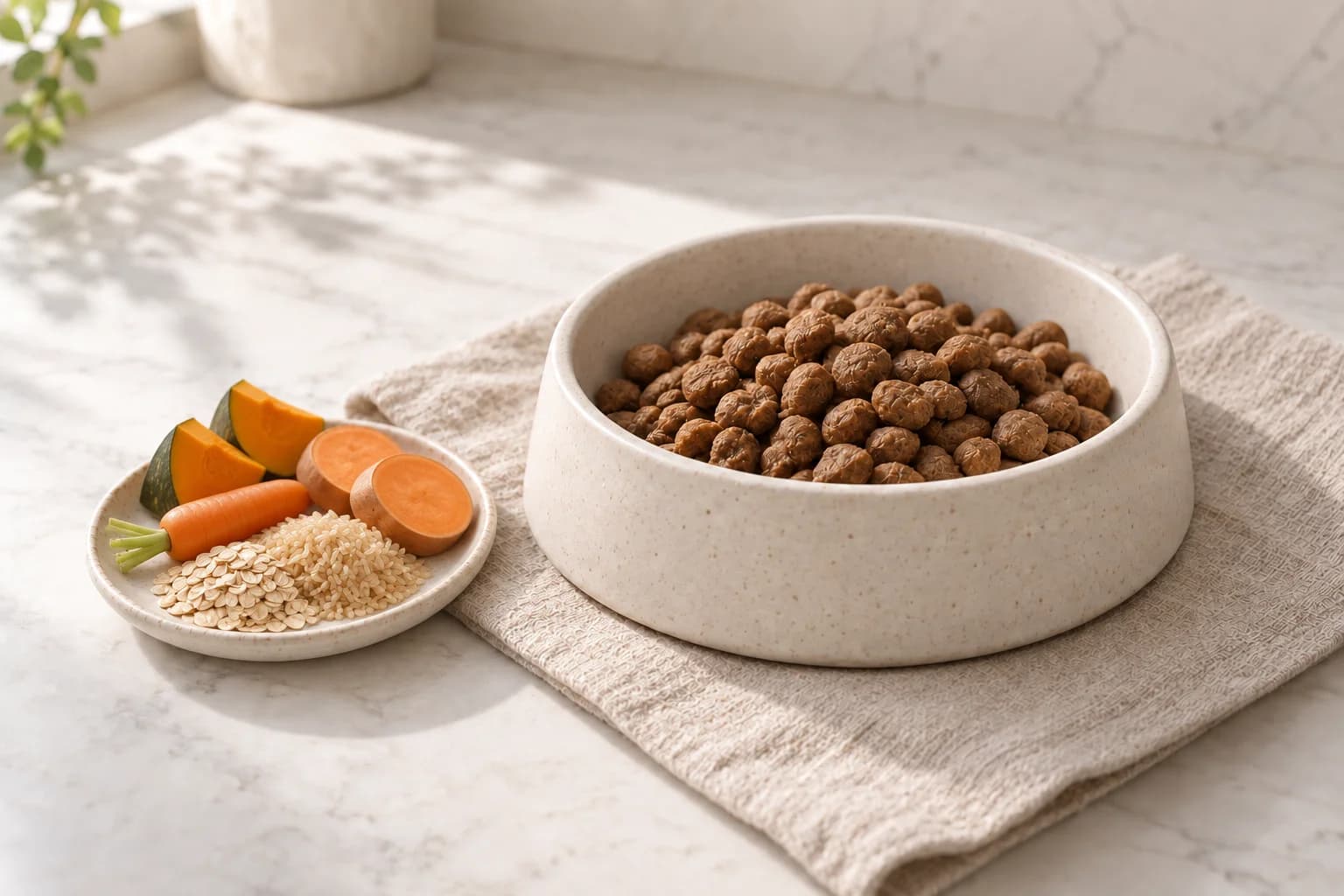
Illustration of grains and vegetables beside a dog-food bowl
Grain and vegetable illustration

01. NUTRIENT PROFILE

Key nutrients & mineral profile

As-fed basis
Disclosed protein and fat
Protein 16%Fat 18%Other 66%Other includes moisture, ash and remaining components.
Position within the same processing type

Compare protein, fat and energy density in low, typical and high bands.

Protein positionLower

This food is on the lower side for crude protein among extruded foods.

Fat positionHigher

This food is on the higher side for crude fat among extruded foods.

Calorie densityHigher

This food is on the higher side for calorie density among extruded foods. The same serving can provide more energy, so check portion guidance.

Key guaranteed nutrientsAs-fed
Calcium0.7%
Phosphorus0.2%
Crude fiber2.2%
Omega-30.82%
Omega-63.99%

Undisclosed values are not treated as zero.

02. INGREDIENT QUALITY & DISCLOSURE

Disclosed ingredients & ingredient grade

The analysis uses the registered ingredients. Complete-panel coverage is not verified, so an unlisted ingredient cannot be assumed absent.

Listed ingredients

Read the listed ingredients below. Complete-panel coverage is not verified here; do not infer that an unlisted ingredient is absent.

Grains and vegetables ingredient illustration
Grain and vegetable illustration
D1.5/6Ingredient gradeConservative
Ingredient #1 · RiceMid
Refined Carb
Ingredient #2 · Maize FlourMid
Refined Carb
Ingredient #3 · Animal FatMid
Generic Fat
Ingredient #1Mid

Rice

Rice is a refined carbohydrate source. It usually reads as a starch and energy source rather than a protein driver. It reads as an mid-tier carb source.

Ingredient #2Mid

Maize Flour

Maize Flour is a refined carbohydrate source. It usually reads as a starch and energy source rather than a protein driver. It reads as an mid-tier carb source.

Ingredient #3Mid

Animal Fat

Animal Fat is a generic fat source. It supports calories, but transparency is weaker than a named oil or fat. It reads as an mid-tier fat source.

Available ingredient listIn disclosed order
Rice — Neutral ingredientsMaize Flour — Neutral ingredientsAnimal Fat — Neutral ingredientsMaize Gluten — High-caution ingredientsSoy Protein Isolate — High-caution ingredientsHydrolyzed Animal Protein — Support positive ingredientsBeet Pulp — Neutral ingredientsMinerals — Neutral ingredientsEgg Powder — Primary positive ingredientsPlant Fiber — Neutral ingredientsFish Oil — Support positive ingredientsSoybean Oil — Neutral ingredientsFructooligosaccharides (FOS) — Support positive ingredientsGreen Tea Extract (source of Polyphenols) — Neutral ingredientsMarigold Extract (source of Lutein) — Neutral ingredients
Primary positive ingredientsSupport positive ingredientsAlternative proteinNeutral ingredientsCaution ingredientsHigh-caution ingredients
Protein sourceIngredient guide

Processed plant protein after the top 3

Animal protein · Hydrolyzed Animal Protein (#6), Egg Powder (#9)

Plant protein · Maize Gluten (#4), Soy Protein Isolate (#5)

The protein number includes processed plant protein support.

Even when it appears later, the protein number is read more conservatively.

Included support ingredientsNutrient guide

renal support markers · Phosphorus 0.2% Sodium 0.2% Potassium 0.7% Crude Protein 16%

Fish oilSkin and joint support ingredientFOSGut support ingredientOmega-3Skin and joint support ingredientOmega-6Skin and coat support ingredientEPA+DHASkin, joint, and heart support ingredientTaurineHeart support ingredientVitamin EAntioxidant and skin support ingredient

03. CHOOSING FOR YOUR DOG

What to consider before feeding

This is a prescription-diet candidate for renal support. Read purpose fit and veterinary guidance before treating it as a standard star-ranked food.

What works well in this food

  • Crude Protein, Phosphorus, Sodium, Potassium values are available for renal diet review. Phosphorus, sodium, and electrolyte targets should follow veterinary test results.
  • Top ingredients do not show a prominent FDA-investigated non-hereditary DCM ingredient profile.

Check before feeding

  • Refined carbohydrates lose fiber, vitamins, and minerals during processing, and mainly act as starch and energy sources. Because of that, our engine reads ingredient quality more conservatively than it would with whole grains.
  • Processed plant protein appears after the top 3, so some protein support is still built into the label number.
  • Calcium:Phosphorus Ratio (3.5:1, reference 1.1~1.6:1): Calcium is relatively high here.

When this food fits your dog

Prescription purpose: renal support.

Consider it first when

  • Public-data-first comparison
  • Baseline shortlist building
  • Conservative first-pass screening

Choose another food first when

  • You want a stronger ingredient-quality story first
  • You need dog-specific fit instead of public-review screening

High calorie density remains the clearest trade-off here.

04. COMPARE FOODS

renal support prescription alternatives

Compare renal support prescription diets first. For therapeutic diets, clinical fit and veterinary direction matter more than a standard score.

05. MANUFACTURING & DISCLOSURE

Manufacturer background & public information

Royal Canin background

Founded in 1968 in France.

Disclosure confidence C1

There is a usable disclosure baseline, but the public record is still fairly thin.

Recall information

This brand has a confirmed public recall history, with a recent 2023 mislabeling case in public sources.

May 12, 2026

Final word

Interpret this for my dog

The food-first public score is only the starting point. Once your dog’s activity, weight goals, life stage, and health status are applied, the recommendation order and interpretation can change.

Treat this review as an early screen. If the food stays interesting, verify it again with your dog-specific context before acting.