Public ReviewGrade CKibble (Extruded)Manufacturing: Kibble (Extruded)

Monge

Monge Natural Superpremium Mini Adult Rich in Chicken

2.5Public ScoreManufacturer-independentPublic-data basedIngredients · nutrition · safety

Key points

Protein source

Moderate caution

Processed plant protein after the top 3

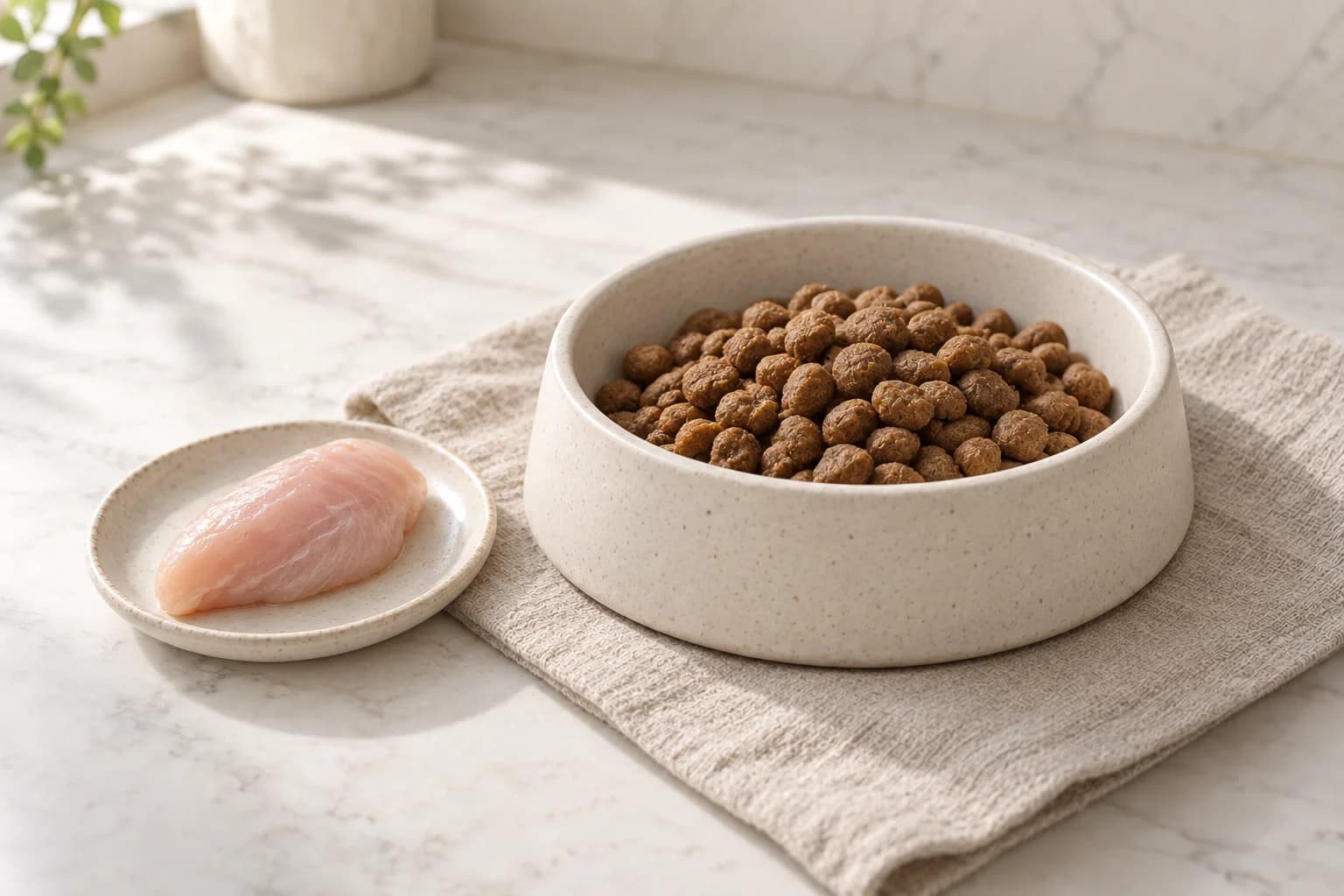
Top 3: Chicken (dried 30%, fresh meat 10%), rice, maize

The protein number includes processed plant protein support.

Even when it appears later, the protein number is read more conservatively.

Ingredient guide

Included support ingredients

Nutrient guide
Fish oilSkin and joint support ingredientSalmon oilSkin and joint support ingredientMOSGut support ingredientXOSGut support ingredientYucca extractStool odor support ingredientGlucosamineJoint support ingredientChondroitinJoint support ingredientOmega-3Skin and joint support ingredientOmega-6Skin and coat support ingredientL-carnitineHeart and weight support ingredient
Needs context

Ingredient grade

C

Grade C

Top ingredient profile

Chicken (dried 30%, fresh meat 10%)
rice
maize
Dehydrated-protein leadPlant booster present
Crude protein26%
Crude protein26%
Crude fat14%
Other 60%

Protein position, fat position, and calorie density position are relative to foods in the same processing type cohort.

biotechProtein position
Typical
query_statsFat position
Typical
local_fire_departmentCalorie density
Higher

This food offers a stable basic protein structure.

Species-named animal protein ingredients stay near the top, and protein does not fall into a clearly low band. The trade-off is that this is not the same as a fresh-meat-first premium pattern.

Nutritional strengths

  • Crude protein does not drop into a clearly low band.
  • Top ingredients do not show a prominent FDA-investigated non-hereditary DCM ingredient profile.

What still needs work

  • Refined carbohydrates lose fiber, vitamins, and minerals during processing, and mainly act as starch and energy sources. Because of that, our engine reads ingredient quality more conservatively than it would with whole grains.
  • Processed plant protein appears after the top 3, so some protein support is still built into the label number.
  • The recipe leans on dehydrated animal ingredients, so texture or palatability can feel different from a fresh-meat-led recipe.

Brand context

Brand background availableRecall research scope limited

Founded in 1963 in Italy. The currently searched public sources are not enough to make a confident recall or withdrawal call for this brand.

Ingredient analysis

The top ingredients are still usable, but this is the part to inspect more carefully before calling the recipe a clear strength.

restaurantIngredient Quality Analysis

C3/6
Ingredient Grade
Mixed
1Chicken (dried 30%, fresh meat 10%)
Named Dehydrated Protein · Upper
2rice
Refined Carb · Mid
3maize
Refined Carb · Mid

Ingredient Analysis Comments

  • Chicken (dried 30%, fresh meat 10%) is a species-named dehydrated animal protein ingredient. It is distinct from rendered meal and usually supports a denser animal-protein structure. It reads as an upper-tier protein source.
  • rice is a refined carbohydrate source. It usually reads as a starch and energy source rather than a protein driver. It reads as an mid-tier carb source.
  • maize is a refined carbohydrate source. It usually reads as a starch and energy source rather than a protein driver. It reads as an mid-tier carb source.
restaurantIngredient Grade CMixed

Full collected ingredient list

17 ingredients
Chicken (dried 30%, fresh meat 10%)ricemaizeanimal fat (chicken oil purified at 99.5%)dried beet pulpbrewers’ yeast inactivatedmaize glutenhydrolysed animal proteins (liver)fish (dried salmon)fish oil (salmon oil 1%)mineralsyeasts products (mannan-oligosaccharides MOS 1%)xylo-oligosaccharide (XOS 0.3%)yucca schidigera (0.3%)algae meal (spirulina - Arthrospira platensis 0.3%)glucosaminechondroitin sulphate
Primary positive ingredients
Support positive ingredients
Neutral ingredients
Caution ingredients
High-caution ingredients

Why processed plant proteins are reviewed cautiously

Ingredient lists are ordered by input weight, not protein contribution. Fresh meat 100g and Soybean Meal 50g can both contribute about 20g of protein, and Pea Protein can deliver a similar amount at around 30g. So these ingredients can materially lift crude protein even outside the top three. The review treats processed plant-protein boosters cautiously because they can weaken the animal-protein-centered profile most guardians expect from a high-protein food.

Why did the base review land here?

Ingredient qualityNutrient disclosure levelManufacturing & trust

This review score combines ingredient composition, nutrient disclosure, manufacturing trust, and core nutrient caution signals.

Nutrient disclosure

Partial disclosure

Core guaranteed analysis is usable, but deeper rows still need a more cautious read.

Safety verification

No fails

No major red flag jumps out first, though undisclosed rows still define the limits of this safety read.

Public data trust (ETF)

C1 tier

Detailed nutrition is visible, but not at a product-level traceability standard.

Where it sits in the same processing cohort

Kibble (Extruded) cohortUpper middle

Within the Kibble (Extruded) cohort, this recipe sits in the upper middle band.

Final word

There is enough here to keep the food in comparison, but not enough to stop comparing yet.

Back to all foods