Label analysisGrade CListed ingredientsKibble (Extruded)

Monge

Monge Natural Superpremium All Breeds Adult Hypo with Salmon and Tuna

Editor ingredient insight

Monge Hypo Salmon & Tuna starts with 58% rice, then salmon and tuna. It is worth considering for dogs that do well on fish and rice, not for low-carb or high-meat-density expectations.
Full ingredient check needed
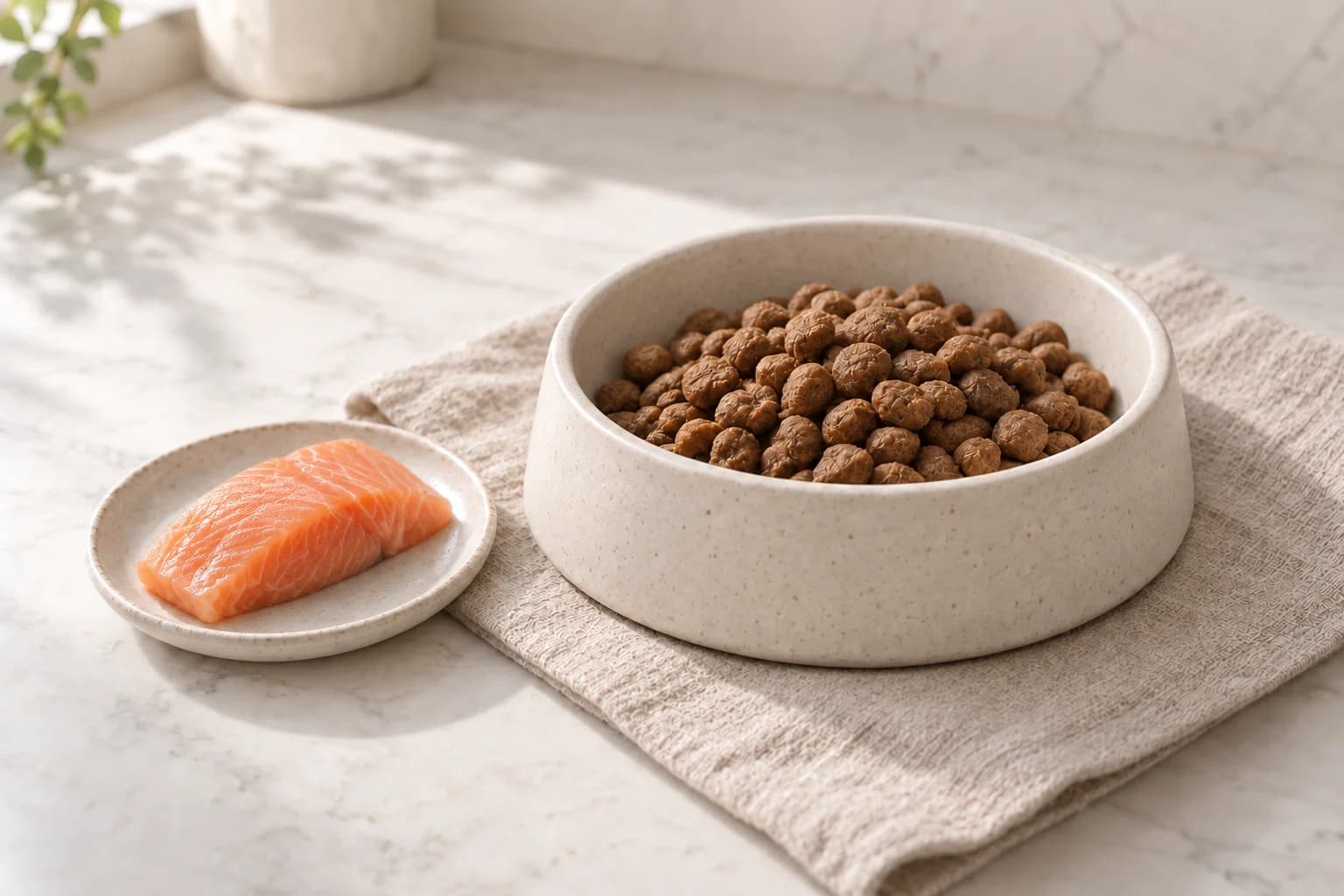
Illustration of salmon beside a dog-food bowl
Primary protein ingredient · Salmon

01. NUTRIENT PROFILE

Key nutrients & mineral profile

As-fed basis
Disclosed protein and fat
Protein 24%Fat 12%Other 64%Other includes moisture, ash and remaining components.
Position within the same processing type

Compare protein, fat and energy density in low, typical and high bands.

Protein positionLower

This food is on the lower side for crude protein among extruded foods.

Fat positionTypical

This food sits around the typical crude fat range among extruded foods.

Calorie densityHigher

This food is on the higher side for calorie density among extruded foods. The same serving can provide more energy, so check portion guidance.

Key guaranteed nutrientsAs-fed
Calcium1.4%
Phosphorus1.1%
Crude fiber2%
Omega-30.9%
Omega-63.6%

Undisclosed values are not treated as zero.

02. INGREDIENT QUALITY & DISCLOSURE

Disclosed ingredients & ingredient grade

The analysis uses the registered ingredients. Complete-panel coverage is not verified, so an unlisted ingredient cannot be assumed absent.

Listed ingredients

Read the listed ingredients below. Complete-panel coverage is not verified here; do not infer that an unlisted ingredient is absent.
Salmon ingredient illustration
Primary protein ingredient · Salmon
C3/6Ingredient gradeMixed
Ingredient #1 · Rice (58%)Mid
Refined Carb
Ingredient #2 · salmon (dried 10% and fresh 8%)Upper
Named Dehydrated Protein
Ingredient #3 · tuna (dried 10%)Upper
Named Dehydrated Protein
Ingredient #1Mid

Rice (58%)

Rice (58%) is a refined carbohydrate source. It usually reads as a starch and energy source rather than a protein driver. It reads as an mid-tier carb source.

Ingredient #2Upper

salmon (dried 10% and fresh 8%)

salmon (dried 10% and fresh 8%) is a species-named dehydrated animal protein ingredient. It is distinct from rendered meal and usually supports a denser animal-protein structure. It reads as an upper-tier protein source.

Ingredient #3Upper

tuna (dried 10%)

tuna (dried 10%) is a species-named dehydrated animal protein ingredient. It is distinct from rendered meal and usually supports a denser animal-protein structure. It reads as an upper-tier protein source.

Available ingredient listIn disclosed order
Rice (58%) — Neutral ingredientssalmon (dried 10% and fresh 8%) — Support positive ingredientstuna (dried 10%) — Support positive ingredientsbrewers’ yeast — Neutral ingredientsvegetable oil (corn oil refined) — Neutral ingredientsfish oil (salmon oil purified at 99.5%) — Support positive ingredientsdried beet pulp — Support positive ingredientsminerals — Neutral ingredientsXylo-oligosaccharide (XOS 0.3%) — Support positive ingredientsYucca schidigera — Support positive ingredientsyeasts products (source of mannan-oligosaccharides MOS) — Neutral ingredientsChondroitin sulphate — Support positive ingredientsGlucosamine — Support positive ingredients
Primary positive ingredientsSupport positive ingredientsAlternative proteinNeutral ingredientsCaution ingredientsHigh-caution ingredients
Protein sourceIngredient guide

Protein sources in the available ingredients

Animal protein · salmon (dried 10% and fresh 8%) (#2), tuna (dried 10%) (#3)

The protein sources shown above come from the registered ingredients. Use familiar ingredients and any required exclusions to narrow your choices.

The complete ingredient panel has not been verified, so absence of plant-protein supplements is not confirmed.

Included support ingredientsNutrient guide
Fish oilSkin and joint support ingredientSalmon oilSkin and joint support ingredientXOSGut support ingredientYucca extractStool odor support ingredientChondroitinJoint support ingredientGlucosamineJoint support ingredientOmega-3Skin and joint support ingredientOmega-6Skin and coat support ingredientL-carnitineHeart and weight support ingredient

03. CHOOSING FOR YOUR DOG

What to consider before feeding

salmon (dried 10% and fresh 8%), tuna (dried 10%) supply animal protein, starting at ingredient 2. Rice (58%), vegetable oil (corn oil refined) supply carbohydrate energy. A carbohydrate source leads the list, a meaningful distinction when seeking a meat-led recipe.

yeasts products (source of mannan-oligosaccharides MOS) supply fiber. For stool or satiety considerations, the disclosed crude-fiber amount adds useful context beyond the ingredient's presence.

Across the registered ingredients, multiple protein sources appear, including salmon, tuna. If a protein must be excluded, any of these sources can change the decision; the first ingredient alone does not make this a single-protein diet.

What works well in this food

  • Named animal ingredients appear after the first grain or starch source.
  • Top ingredients do not show a prominent FDA-investigated non-hereditary DCM ingredient profile.

Check before feeding

  • Phosphorus is 1.1% on the label, at or above 1%. Senior dogs or dogs with kidney concerns should have phosphorus restriction reviewed with a veterinarian before using it as a staple food.
  • Refined carbohydrates lose fiber, vitamins, and minerals during processing, and mainly act as starch and energy sources. Because of that, our engine reads ingredient quality more conservatively than it would with whole grains.
  • Higher calorie density can raise daily intake in a gram-for-gram switch. Weight reduction needs portions and treat calories to be adjusted together.

When this food fits your dog

Among foods made the same way, protein is lower, fat is typical, and calorie density is higher. This combination provides more energy per gram. Compare it when smaller portions need to supply calories, and adjust grams first for a dog prone to weight gain. Higher calories do not establish a higher animal-protein share. Strong for nutrition-number comparison.

Consider it first when

  • Comparing real nutrient numbers
  • Shopping by disclosure breadth
  • Choosing from public data first

Choose another food first when

  • Meat intensity is the first shopping axis
  • You want the strongest ingredient quality first

High calorie density remains the clearest trade-off here.

04. COMPARE FOODS

Smart salmon / tuna alternatives

Exact protein-type matches come first, then close protein-family matches fill the comparison.

05. MANUFACTURING & DISCLOSURE

Manufacturer background & public information

Monge background

Founded in 1963 in Italy.

Disclosure confidence C1

Detailed nutrition is visible, but not at a product-level traceability standard.

Recall information

The currently searched public sources are not enough to make a confident recall or withdrawal call for this brand.

May 12, 2026

Final word

Interpret this for my dog

The food-first public score is only the starting point. Once your dog’s activity, weight goals, life stage, and health status are applied, the recommendation order and interpretation can change.

There is enough here to keep the food in comparison, but not enough to stop comparing yet.