Label analysisGrade AListed ingredientsKibble (Extruded)

Brit

Brit Care Dog Grain-free Puppy Salmon

Editor ingredient insight

Brit Care Dog Grain-free Puppy Salmon has a clear salmon-and-potato growth profile: salmon 55%, potatoes 26%, chicken fat, salmon oil, 30% protein, 18% fat, and 3,930 kcal/kg.

It is worth considering for fish-tolerant puppies needing energy, while being cautious with chicken-fat avoidance, potato sensitivity, weight gain, or tightly managed large-breed growth.

Dehydrated-protein leadFull ingredient check needed
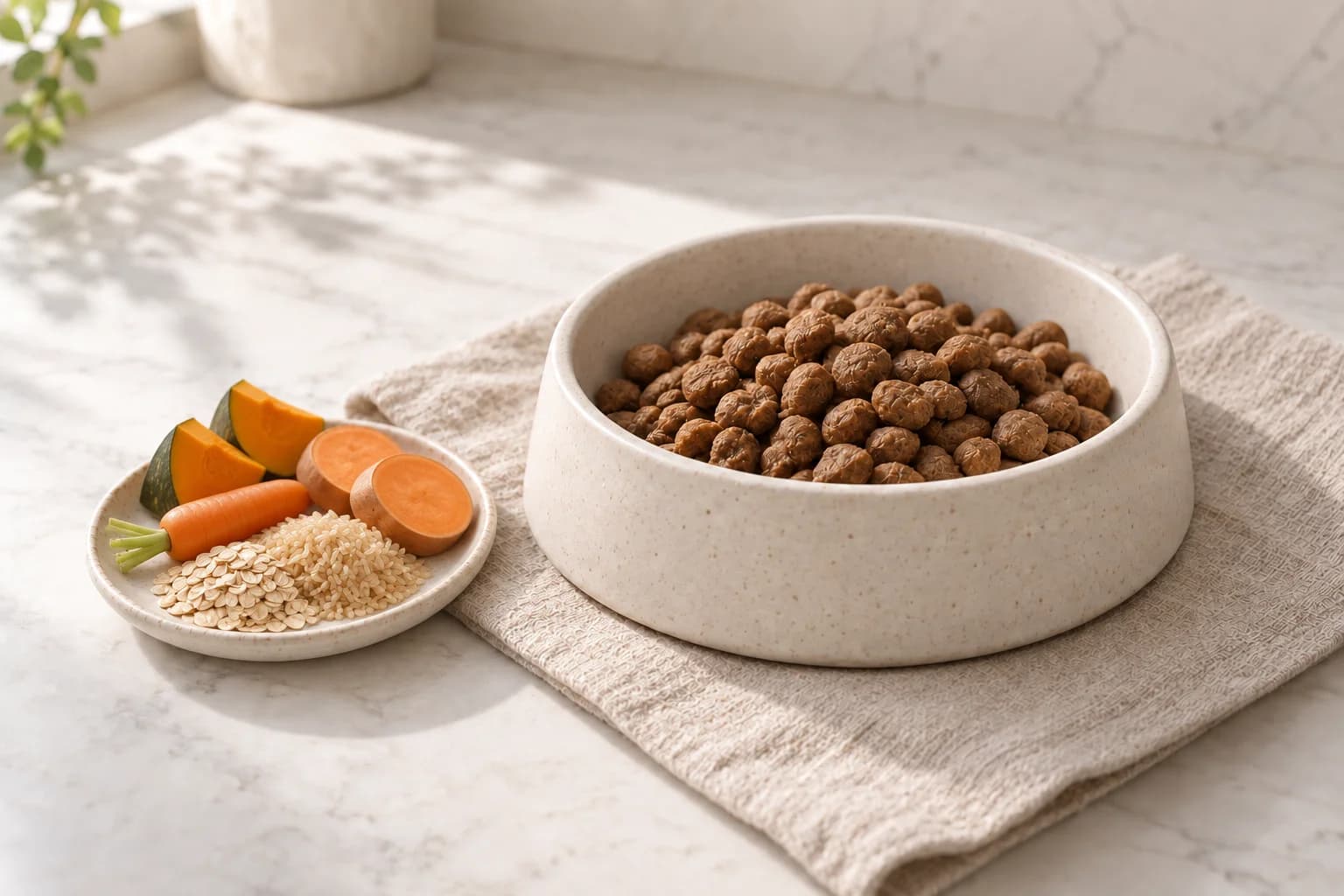
Illustration of grains and vegetables beside a dog-food bowl
Grain and vegetable illustration

01. NUTRIENT PROFILE

Key nutrients & mineral profile

As-fed basis
Disclosed protein and fat
Protein 30%Fat 18%Other 52%Other includes moisture, ash and remaining components.
Position within the same processing type

Compare protein, fat and energy density in low, typical and high bands.

Protein positionHigher

This food is on the higher side for crude protein among extruded foods.

Fat positionHigher

This food is on the higher side for crude fat among extruded foods.

Calorie densityHigher

This food is on the higher side for calorie density among extruded foods. The same serving can provide more energy, so check portion guidance.

Key guaranteed nutrientsAs-fed
Calcium1.2%
Phosphorus0.9%
Crude fiber2.5%
Omega-31.3%
Omega-62.3%

Undisclosed values are not treated as zero.

02. INGREDIENT QUALITY & DISCLOSURE

Disclosed ingredients & ingredient grade

The analysis uses the registered ingredients. Complete-panel coverage is not verified, so an unlisted ingredient cannot be assumed absent.

Listed ingredients

Read the listed ingredients below. Complete-panel coverage is not verified here; do not infer that an unlisted ingredient is absent.

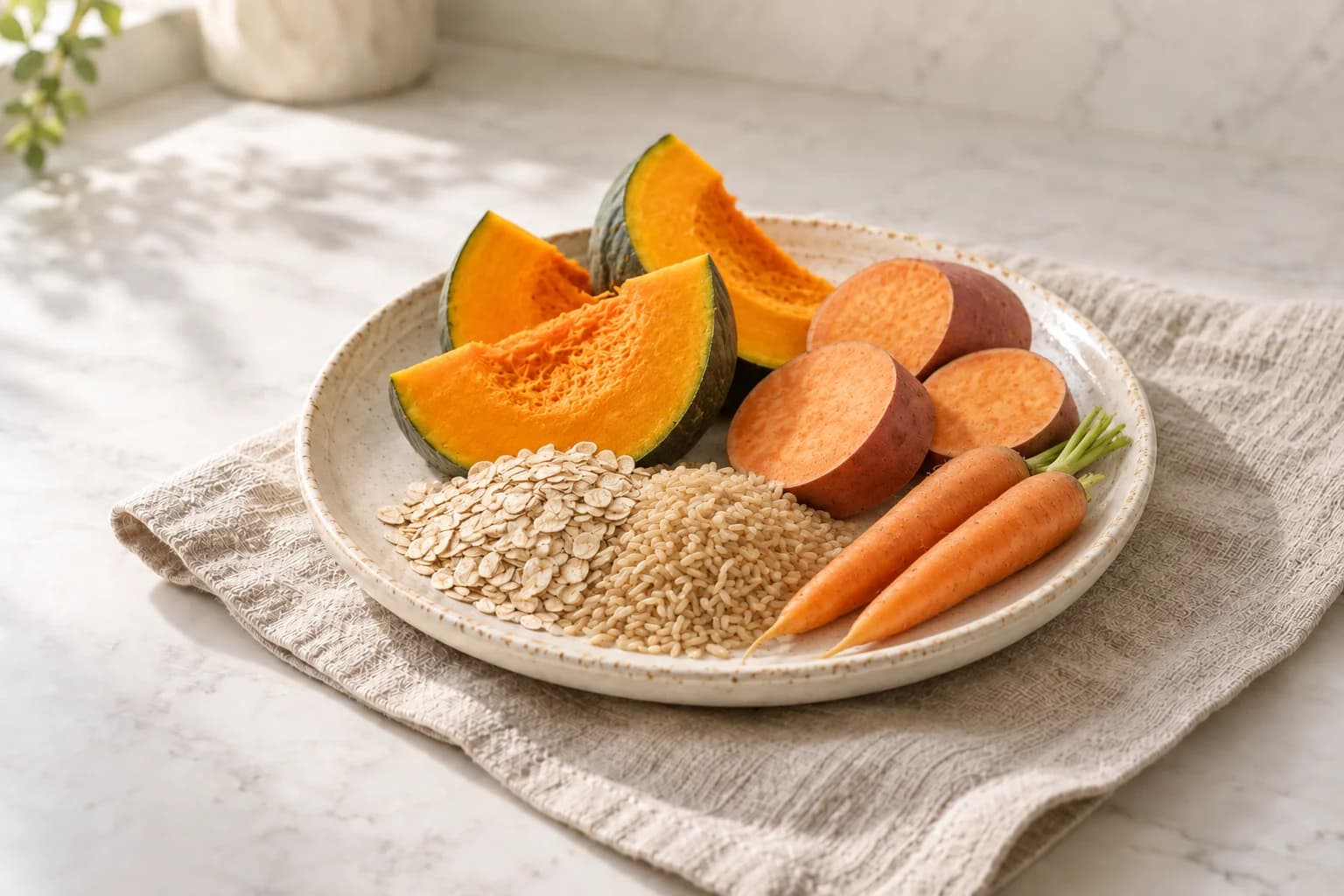
Grains and vegetables ingredient illustration
Grain and vegetable illustration
A+6/6Ingredient gradeTop Premium
Ingredient #1 · salmon (55%) (dehydrated salmon, hydrolysed salmon)Upper
Named Dehydrated Protein
Ingredient #2 · potatoes (26%)Mid
Starchy Tuber
Ingredient #3 · chicken fatUpper
Named Fat
Ingredient #1Upper

salmon (55%) (dehydrated salmon, hydrolysed salmon)

salmon (55%) (dehydrated salmon, hydrolysed salmon) is a species-named dehydrated animal protein ingredient. It is distinct from rendered meal and usually supports a denser animal-protein structure. It reads as an upper-tier protein source.

Ingredient #2Mid

potatoes (26%)

potatoes (26%) is a starchy tuber ingredient. It is not a grain, but it still reads mainly as a starch and energy source. It reads as an mid-tier carb source.

Ingredient #3Upper

chicken fat

chicken fat is a named fat source. It supports energy density and fat quality more than protein quality. It reads as an upper-tier fat source.

Available ingredient listIn disclosed order
salmon (55%) (dehydrated salmon, hydrolysed salmon) — Support positive ingredientspotatoes (26%) — Neutral ingredientschicken fat — Neutral ingredientssalmon oil (3%) — Support positive ingredientsdried apple pulp — Neutral ingredientsnatural flavour — Support positive ingredientsbrewer's yeast — Neutral ingredientshydrolysed yeast (0.5% - a source of inositol and amino acids) — Neutral ingredientspea flour — Caution ingredientsglucosamine (300 mg/kg) — Support positive ingredientsfructo-oligosaccharides (230 mg/kg) — Neutral ingredientschondroitin sulphate (230 mg/kg) — Support positive ingredientsmannan-oligosaccharides (180 mg/kg) — Neutral ingredientsMojave yucca (180 mg/kg) — Support positive ingredientsmilk thistle seed (110 mg/kg) — Support positive ingredientsbeta-glucans (60 mg/kg) — Neutral ingredientsdried motherwort (60 mg/kg) — Neutral ingredientsdried sea buckthorn (60 mg/kg) — Neutral ingredientsprobiotic Lactobacillus helveticus HA - 122 inactivated (15x10^9 cells/kg) — Support positive ingredients
Primary positive ingredientsSupport positive ingredientsAlternative proteinNeutral ingredientsCaution ingredientsHigh-caution ingredients
Protein sourceIngredient guide

Protein sources in the available ingredients

Animal protein · salmon (55%) (dehydrated salmon, hydrolysed salmon) (#1)

Plant protein · pea flour (#9)

The protein sources shown above come from the registered ingredients. Use familiar ingredients and any required exclusions to narrow your choices.

The complete ingredient panel has not been verified, so absence of plant-protein supplements is not confirmed.

Included support ingredientsNutrient guide
Salmon oilSkin and joint support ingredientGlucosamineJoint support ingredientFOSGut support ingredientChondroitinJoint support ingredientMOSGut support ingredientYucca extractStool odor support ingredientMilk thistleLiver support ingredientBeta-glucanImmune support ingredientProbioticsGut support ingredientOmega-3Skin and joint support ingredientOmega-6Skin and coat support ingredientEPA+DHASkin, joint, and heart support ingredientTaurineHeart support ingredientL-carnitineHeart and weight support ingredientVitamin EAntioxidant and skin support ingredientBiotinSkin and coat support ingredient

03. CHOOSING FOR YOUR DOG

What to consider before feeding

salmon (55%) (dehydrated salmon, hydrolysed salmon) supply animal protein at the start of the ingredient list. potatoes (26%) supply carbohydrate energy. The recipe combines animal protein sources with carbohydrate sources.

pea flour contribute plant protein alongside carbohydrates and fiber further down the ingredient list. Total crude protein is not a measure of meat-derived protein alone. chicken fat add fat and energy; fat content is a separate choice criterion from the protein sources.

What works well in this food

  • A fish-protein lead can be worth reviewing when you are trying to avoid a specific land-meat protein.
  • A species-named dehydrated animal ingredient keeps the basic protein structure fairly stable.
  • Top ingredients do not show a prominent FDA-investigated non-hereditary DCM ingredient profile.

Check before feeding

  • Higher calorie density can raise daily intake in a gram-for-gram switch. Weight reduction needs portions and treat calories to be adjusted together.
  • The recipe leans on dehydrated animal ingredients, so texture or palatability can feel different from a fresh-meat-led recipe.
  • Public data is usable, but not at the highest-trust tier.

When this food fits your dog

Among foods made the same way, protein is higher, fat is higher, and calorie density is higher. Compare this combination when both protein and concentrated energy matter. It can help plan smaller portions, but dogs prone to weight gain should not switch gram-for-gram from a less calorie-dense food. Stable basic protein structure.

Consider it first when

  • Steady protein-first shopping
  • Choosing from named animal proteins
  • Balanced shortlist building

Choose another food first when

  • Weight control comes first
  • Fresh-meat-first premium quality matters most

High calorie density remains the clearest trade-off here.

04. COMPARE FOODS

Smart chicken / salmon alternatives

This food is close to the top tier, so the useful comparison is its strongest rivals in the same protein lane.

05. MANUFACTURING & DISCLOSURE

Manufacturer background & public information

Brit background

Available brand information is shown below.

Disclosure confidence —

Trust context is limited, so treat this as a useful clue rather than a strong confidence claim.

Recall information

The currently searched public sources are not enough to make a confident recall or withdrawal call for this brand.

May 12, 2026

Final word

Interpret this for my dog

The food-first public score is only the starting point. Once your dog’s activity, weight goals, life stage, and health status are applied, the recommendation order and interpretation can change.

As a public review, this is a strong candidate to carry forward. The next question is whether it stays this strong for your own dog.