Dehydrated chicken (40%)
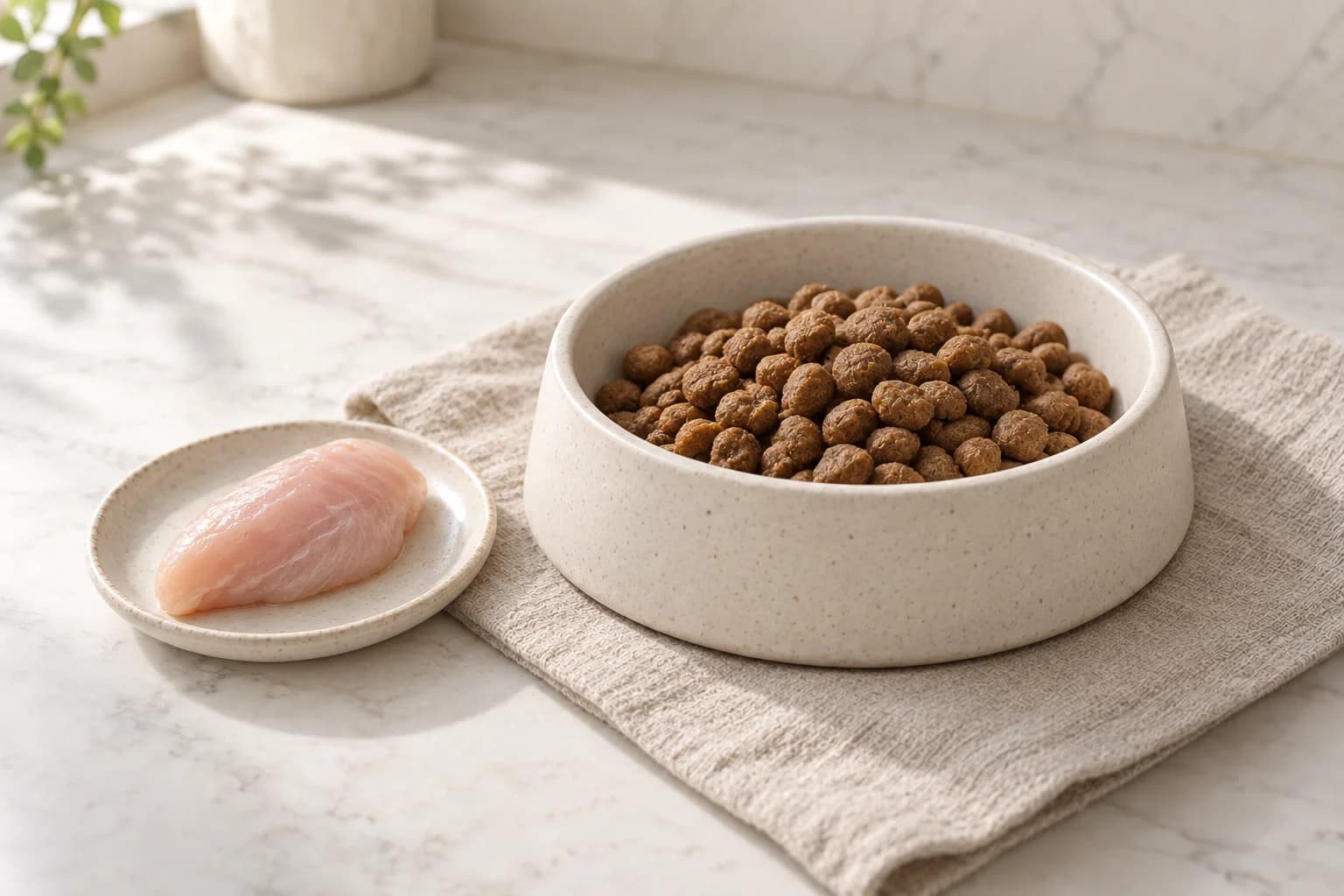
Dehydrated chicken (40%) is a species-named dehydrated animal protein ingredient. It is distinct from rendered meal and usually supports a denser animal-protein structure. It reads as an upper-tier protein source.
Alleva
Alleva Holistic Chicken & Duck Mini is the one I would consider for active small dogs that clearly tolerate chicken and duck and need muscle, joint, and coat support in the same food.
It leads with 40% dehydrated chicken, 20% fresh chicken, and 10% dehydrated duck, followed by sweet potato, chicken fat, pea starch, and herring oil.
At 37% protein, 18% fat, 3,914 kcal/kg, 1,300 mg/kg glucosamine, 1,100 mg/kg chondroitin, 1.0% EPA/DHA, and 500 mg/kg L-carnitine, the disclosure is strong.
Choose another recipe for chicken allergy, dogs that gain weight on richer foods, or phosphorus/mineral-sensitive cases because calcium/phosphorus are 1.7%/1.2%.
01. NUTRIENT PROFILE
Compare protein, fat and energy density in low, typical and high bands.
This food is on the higher side for crude protein among extruded foods.
This food is on the higher side for crude fat among extruded foods.
This food is on the higher side for calorie density among extruded foods. The same serving can provide more energy, so check portion guidance.
Undisclosed values are not treated as zero.
02. INGREDIENT QUALITY & DISCLOSURE
The top ingredients give this recipe a strong first protein read, so the ingredient section starts from a favorable position.

Dehydrated chicken (40%) is a species-named dehydrated animal protein ingredient. It is distinct from rendered meal and usually supports a denser animal-protein structure. It reads as an upper-tier protein source.
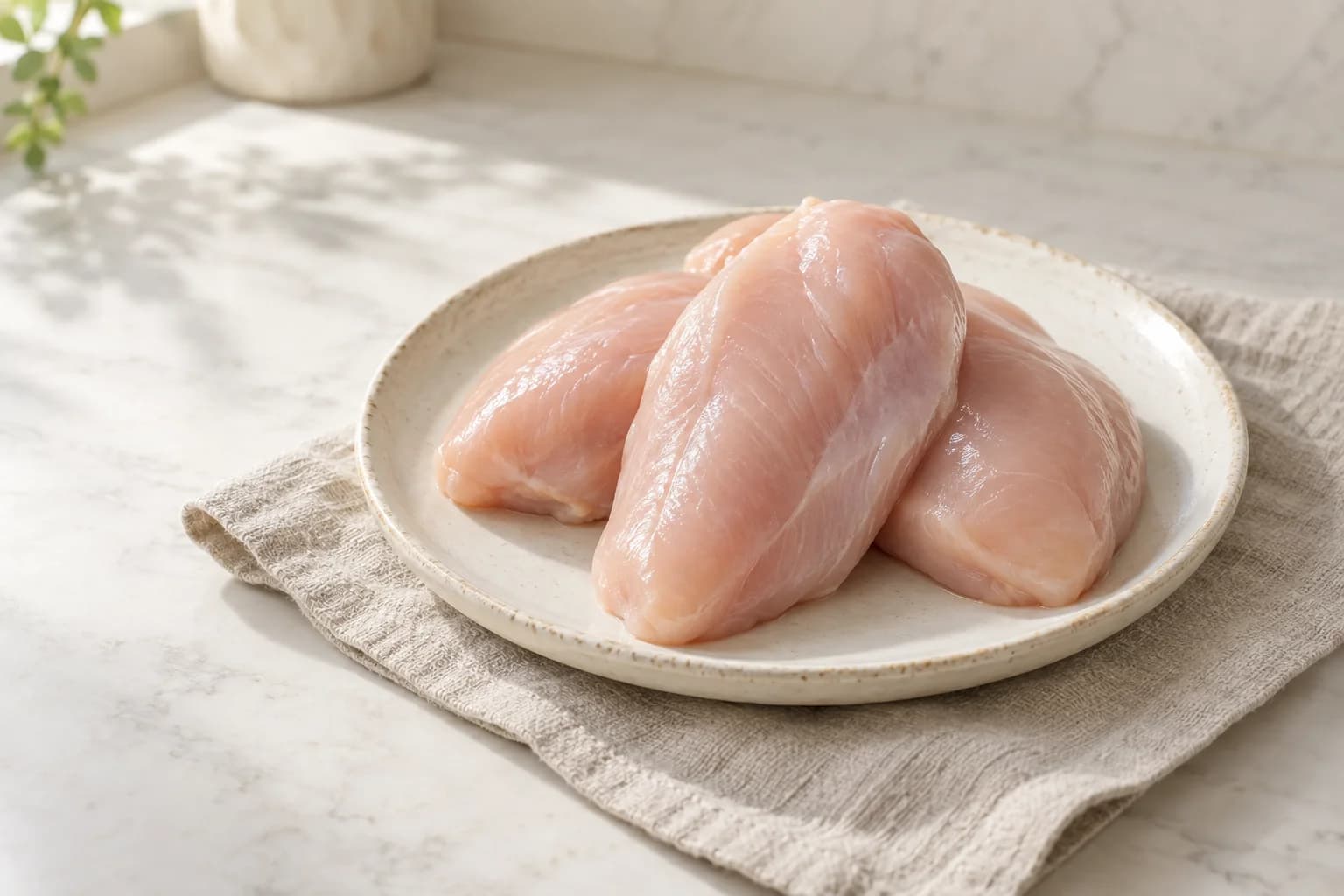
fresh boneless chicken (20%) is a named fresh meat ingredient. The animal source is clearly identified. It reads as an top-tier protein source.
dehydrated duck (10%) is a species-named dehydrated animal protein ingredient. It is distinct from rendered meal and usually supports a denser animal-protein structure. It reads as an upper-tier protein source.
Animal protein · Dehydrated chicken (40%) (#1), fresh boneless chicken (20%) (#2), dehydrated duck (10%) (#3), chicken liver (#9), chicken cartilage (source of glucosamine and chondroitin sulfate) (#13)
Named dry animal protein gives a relatively clear protein source.
It can be clearer for actual protein contribution than a flashy fresh-meat label.
03. CHOOSING FOR YOUR DOG
Dehydrated chicken (40%), fresh boneless chicken (20%) supply animal protein at the start of the ingredient list. sweet potato, pea starch supply carbohydrate energy. The recipe combines animal protein sources with carbohydrate sources.
chicken fat add fat and energy; fat content is a separate choice criterion from the protein sources.
Across the registered ingredients, multiple protein sources appear, including chicken, duck. If a protein must be excluded, any of these sources can change the decision; the first ingredient alone does not make this a single-protein diet.
Among foods made the same way, protein is higher, fat is higher, and calorie density is higher. Compare this combination when both protein and concentrated energy matter. It can help plan smaller portions, but dogs prone to weight gain should not switch gram-for-gram from a less calorie-dense food.
High calorie density remains the clearest trade-off here.
04. COMPARE FOODS
This food is close to the top tier, so the useful comparison is its strongest rivals in the same protein lane.
05. MANUFACTURING & DISCLOSURE
Founded in 1901 in Italy.
Detailed nutrition is visible, but not at a product-level traceability standard.
The currently searched public sources are not enough to make a confident recall or withdrawal call for this brand.
May 12, 2026